
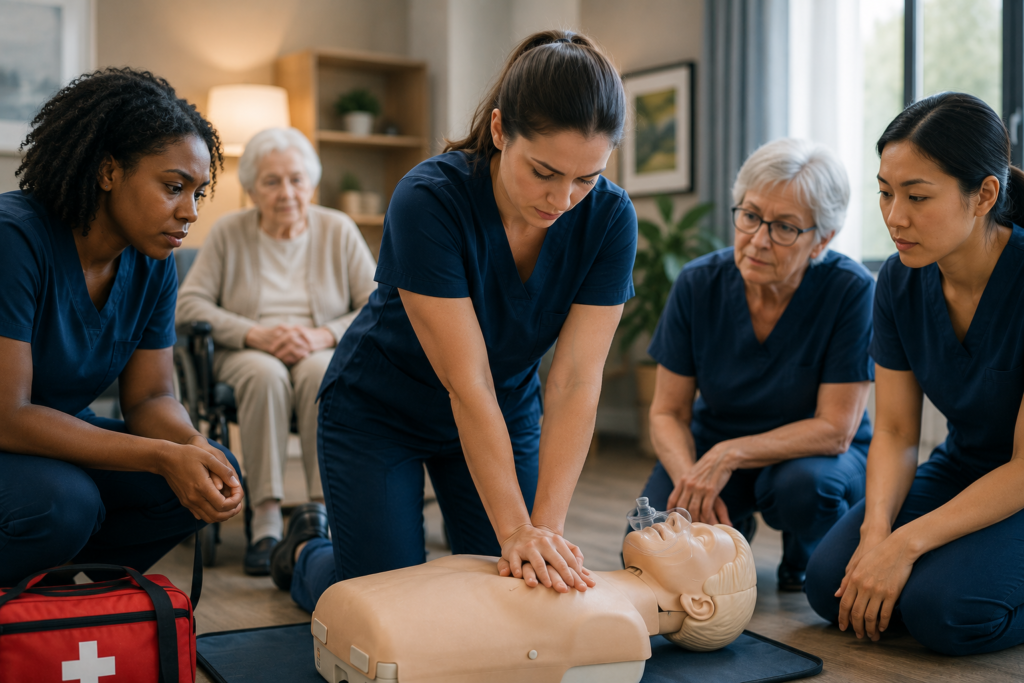
Caregiving is more than providing daily assistance—it’s about being prepared to protect the health and well-being of those who depend on you.
In assisted living communities, nursing facilities, home care settings, and healthcare environments, emergencies can happen without warning. A resident may suddenly collapse, a patient may stop breathing, or someone may begin choking during a meal.
During these moments, staying calm is just as important as knowing what to do.
CPR and First Aid training help caregivers develop both the practical skills and confidence needed to respond effectively when every second matters.
Why Staying Calm Matters During Emergencies
Medical emergencies are stressful by nature. Without preparation, even experienced caregivers may feel overwhelmed by the pressure of making quick decisions.
Remaining calm allows caregivers to:
- Assess the situation accurately
- Make informed decisions
- Follow emergency procedures
- Communicate clearly with coworkers
- Provide immediate care until emergency medical services arrive
A calm response can help create a safer environment for both the individual experiencing the emergency and everyone around them.
Confidence Comes From Preparation
Many people believe confidence is something you’re born with.
In reality, confidence is built through knowledge, repetition, and experience.
CPR and First Aid training provide caregivers with opportunities to practice responding to realistic emergency situations in a supportive learning environment.
The more caregivers practice these skills, the more prepared they become to respond confidently when real emergencies occur.
Hands-On Practice Reduces Hesitation
One of the biggest challenges during emergencies is hesitation.
Caregivers may wonder:
- Am I doing the right thing?
- What should I do first?
- What if I make a mistake?
Hands-on CPR training helps replace uncertainty with practical experience.
By practicing chest compressions, AED use, and emergency response techniques, caregivers become more comfortable taking immediate action when needed.
Better Teamwork During Critical Moments
Emergency response is rarely a one-person effort.
Caregivers often work together to:
- Call for emergency assistance
- Begin CPR
- Retrieve an AED
- Monitor the patient
- Communicate with emergency responders
Training helps teams understand their roles and practice working together under pressure.
When everyone knows what to do, emergency response becomes faster, more organized, and more effective.
Families Feel More Confident in Prepared Caregivers
Families trust caregivers with the safety and well-being of their loved ones.
Knowing that staff receive regular CPR and First Aid training provides reassurance that caregivers are prepared to respond during unexpected situations.
Prepared caregivers demonstrate:
- Professionalism
- Compassion
- Competence
- Commitment to resident safety
These qualities help strengthen trust between care providers and the families they serve.
Regular Training Keeps Skills Fresh
CPR is not a skill that should be learned once and forgotten.
Like many practical skills, CPR techniques and confidence can decline without regular practice.
Ongoing training helps caregivers:
- Reinforce life-saving techniques
- Stay updated on current guidelines
- Maintain confidence
- Improve emergency response performance
Regular refresher training ensures caregivers remain prepared throughout their careers.
Emergency Preparedness Strengthens Care Quality
Providing quality care means being ready for both routine responsibilities and unexpected emergencies.
Organizations that invest in CPR and First Aid training demonstrate a commitment to:
- Resident safety
- High-quality care
- Professional development
- Emergency preparedness
Prepared caregivers help create a safer and more reassuring environment for residents, patients, and their families.
Ready to Help Your Caregiving Team Respond with Confidence?
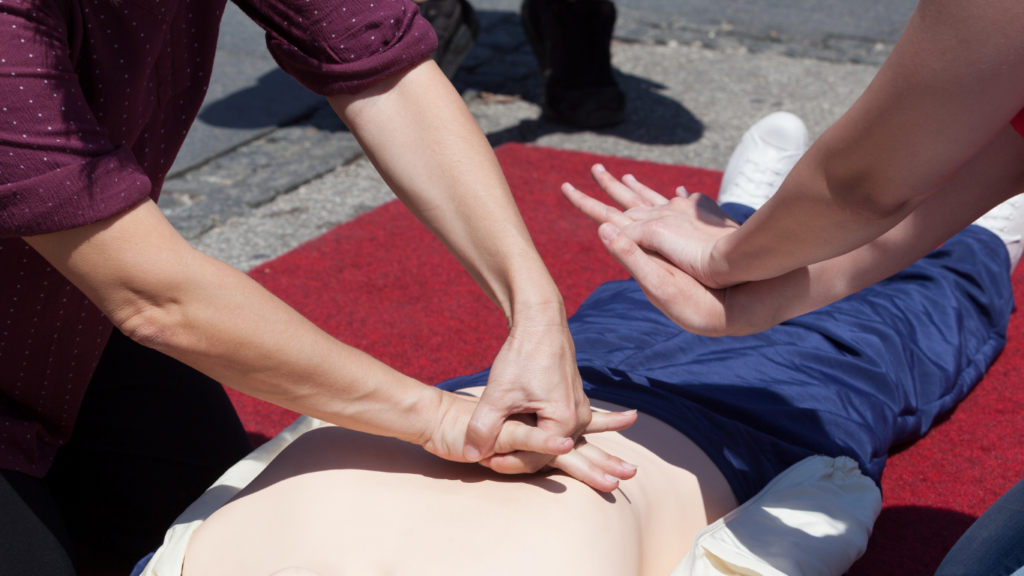
Caregivers play a vital role in protecting the people they serve. Providing regular CPR and First Aid training helps your team stay calm under pressure, strengthen emergency response skills, and deliver safer, more confident care.
Amara Career Training offers on-site CPR and First Aid training designed for assisted living communities, healthcare facilities, and caregiving teams. Our hands-on instruction equips staff with the practical skills and confidence they need to respond effectively when emergencies happen.
Prepare your caregivers with training that builds confidence and inspires trust.