
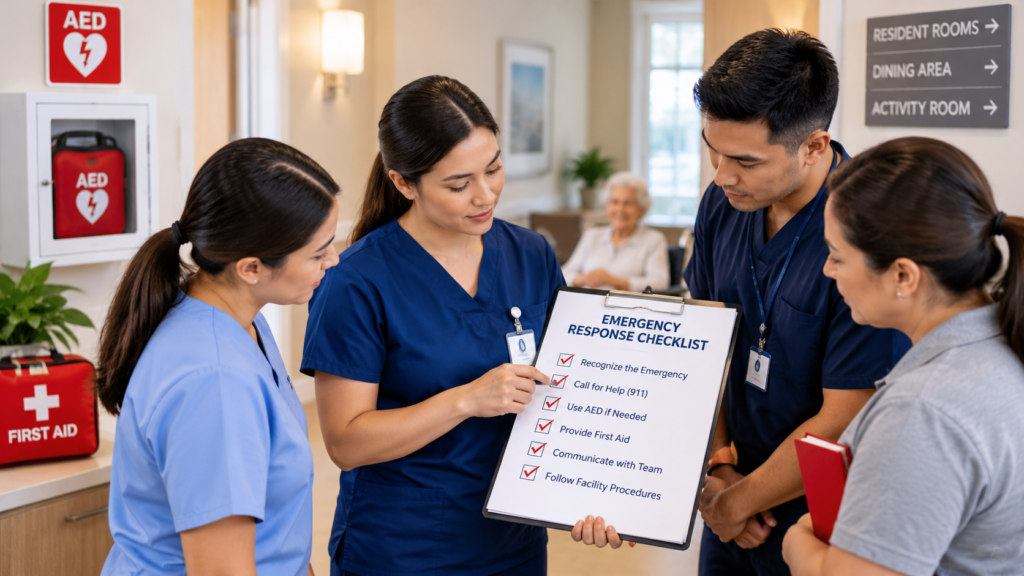
How to Create an Emergency Response Checklist for Assisted Living Staff
Emergencies can happen at any time in an assisted living facility. A resident may experience a fall, difficulty breathing, a cardiac emergency, or another situation that requires immediate attention.
For staff members, knowing what to do, who to contact, and where to find emergency equipment can make a major difference.
An emergency response checklist gives staff a simple framework to follow when unexpected situations occur. It can also help facility managers identify gaps in their current emergency preparedness plan.
Why Assisted Living Facilities Need an Emergency Response Checklist
Assisted living staff care for residents who may have different medical, mobility, and communication needs. Because of this, emergencies may require a quick and coordinated response.
A checklist can help staff remember important steps during a stressful situation.
It can also help managers review whether employees understand:
- How to recognize an emergency
- Who to notify
- When to call 911
- Where emergency equipment is located
- How to respond while waiting for emergency services
- How to communicate with residents, families, and other staff
- Where emergency procedures and contact information are kept
A checklist should support, not replace, the facility’s formal emergency response policies and procedures.
Assisted Living Emergency Response Checklist
Facility managers can use the following checklist as a starting point when reviewing their emergency preparedness procedures.
1. Recognize the Emergency
The first step is recognizing when a resident needs immediate assistance.
Staff should know how to identify situations that may require emergency response, such as:
- Unresponsiveness
- Difficulty breathing
- Suspected cardiac arrest
- Severe bleeding
- Serious falls or injuries
- Choking
- Sudden changes in consciousness
- Other potentially life-threatening conditions
Employees should understand the facility’s procedures for escalating medical emergencies.
2. Assess the Situation and Stay Safe
Before responding, staff should consider whether the environment is safe.
Depending on the situation, staff may need to:
- Check the immediate surroundings
- Use appropriate protective equipment when needed
- Avoid putting themselves or others in additional danger
- Follow facility emergency procedures
Staff should also know their individual role during an emergency.
3. Call for Emergency Medical Help When Appropriate
When an emergency requires professional medical assistance, staff should know how to activate the facility’s emergency response process.
This may include:
- Calling 911
- Providing the facility’s exact location
- Describing the emergency clearly
- Following the dispatcher’s instructions
- Sending someone to meet emergency responders when appropriate
Facility managers should make sure important location and access information is easy for staff to find.
4. Know Where the AED Is Located
If the facility has an AED, employees should know exactly where it is located.
Consider including the following information in your emergency preparedness review:
- AED location
- How to access the AED
- Who is trained to use it
- Whether the AED is readily accessible
- Whether routine equipment checks are being completed according to the manufacturer’s guidance
Employees who receive CPR and AED training can also become more familiar with the equipment and the steps involved in an emergency response.
5. Know Where First Aid Supplies Are Stored
Staff should know where First Aid supplies are located before an emergency happens.
Check that employees know:
- Where First Aid kits are stored
- How to access them
- Who is responsible for checking supplies
- How missing or expired supplies are reported
The exact supplies needed will depend on the facility and its emergency preparedness policies.
6. Assign Clear Staff Responsibilities
During an emergency, multiple people may need to act at the same time.
Facilities can establish clear responsibilities such as:
- Person responding to the resident
- Person calling 911
- Person retrieving emergency equipment
- Person directing emergency responders
- Person communicating with supervisors or administrators
- Person assisting with other residents if needed
Clear roles can help reduce confusion when several staff members are responding to the same situation.
7. Communicate Clearly With the Team
Good communication is especially important during high-stress situations.
Staff should know how to communicate:
- What happened
- Where the emergency occurred
- What assistance is needed
- Whether emergency services have been contacted
- Who is responsible for each task
Facilities should also establish communication procedures that fit their staffing structure and policies.
8. Prepare for Different Shifts
Emergency preparedness shouldn’t depend on which employees happen to be working.
Assisted living facilities may have day, evening, overnight, weekend, and holiday shifts.
Managers should review whether emergency response procedures and trained personnel are adequately covered across different shifts.
This is especially important when staffing levels change throughout the day.
Make CPR and First Aid Training Part of Emergency Preparedness
An emergency checklist tells staff what needs to happen, but employees also need the skills to respond appropriately.
CPR and First Aid training can give staff opportunities to learn and practice important emergency response skills.
Hands-on training can help employees become more familiar with:
- CPR
- AED response
- Basic First Aid
- Emergency communication
- Response procedures
- Working as part of an emergency response team
For assisted living facilities, training should be aligned with the responsibilities of the staff members and the needs of the organization.
Keep Staff Training and Certifications Up to Date
An emergency preparedness checklist should also include staff training records.
Managers can keep track of:
- Employee name
- Training completed
- Certification type
- Date completed
- Certification expiration date
- Upcoming renewal date
Keeping this information organized can make it easier to identify employees who need initial training or renewal.
You can also read How Often Should Staff Renew CPR Certification?
Practice the Emergency Response Plan
Having a checklist is helpful, but staff should also have opportunities to practice emergency procedures.
Practice scenarios can help teams become more familiar with:
- Who takes the lead
- Who calls for help
- Where equipment is located
- How staff communicate
- How other residents are supported
- How emergency responders will access the facility
After a drill or practice scenario, managers can ask:
What worked well?
What caused confusion?
What should we change before the next emergency?
This can help facilities identify areas for improvement.
Review the Checklist Regularly
An emergency response checklist should be reviewed whenever there are meaningful changes to the facility or its operations.
Consider reviewing the checklist when:
- New employees join the team
- Staff responsibilities change
- Emergency equipment is relocated
- Facility layouts change
- Contact information changes
- Emergency procedures are updated
- Training certifications expire
- A real emergency or practice drill reveals a gap
Regular reviews can help keep emergency preparedness procedures relevant and useful.
Common Emergency Preparedness Gaps in Assisted Living
Even facilities with emergency procedures may have areas that need improvement.
Common gaps can include:
Staff Don't Know Where Emergency Equipment Is
Employees may know that an AED or First Aid kit exists but not know exactly where to find it.
Procedures Aren't Familiar to Every Shift
A procedure may be well understood by daytime staff but less familiar to overnight or weekend employees.
Training Records Aren't Up to Date
Outdated records can make it difficult to determine which employees have current training.
Roles Aren't Clearly Defined
When everyone assumes someone else is calling 911 or retrieving equipment, valuable time can be lost.
Emergency Plans Aren't Practiced
Employees may understand a procedure on paper but feel less confident when they have to apply it under pressure.
Final Thoughts
Emergency preparedness in an assisted living facility is about more than having an emergency plan stored in a binder.
Staff need to know what to do, where to go, who to contact, and how to respond when an emergency occurs.
A simple emergency response checklist can help facility managers identify important preparedness areas, from emergency equipment and communication to staff responsibilities and training.
Most importantly, the checklist should work alongside appropriate CPR, AED, and First Aid training so employees have both the knowledge and practical skills needed to respond.
Prepared staff can help create a safer and more responsive environment for the residents they serve.
Strengthen Your Assisted Living Team's Emergency Preparedness
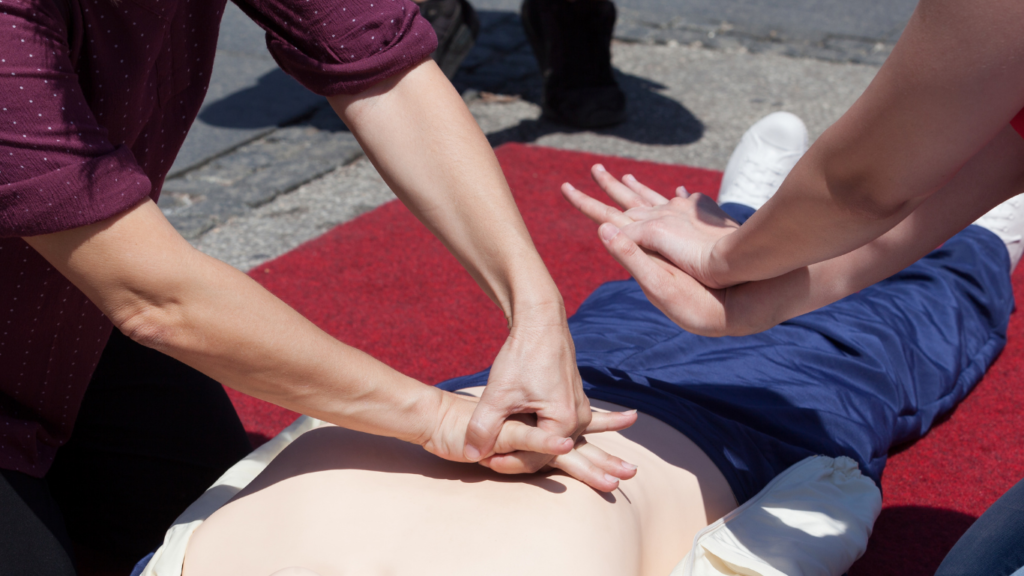
Amara Career Training provides CPR and First Aid training to help organizations prepare their employees for emergency situations.
For assisted living facilities, hands-on training can help staff practice essential emergency response skills in a structured learning environment.
Want to help your team become better prepared? Contact Amara Career Training to learn more about CPR and First Aid training for your organization.