
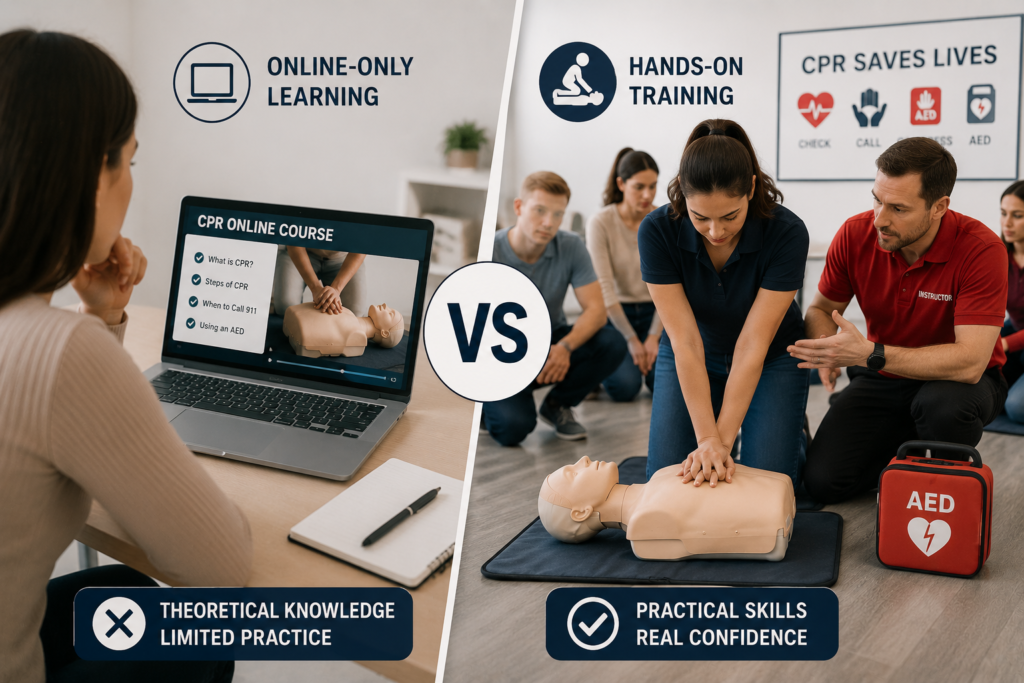
Learning CPR is one of the most valuable skills a person can have. Whether you’re a healthcare professional, caregiver, construction worker, teacher, or office employee, knowing how to respond during a medical emergency can make a life-saving difference.
Today, many CPR courses are available online, offering flexibility and convenience for busy learners. While online education is an excellent way to introduce CPR concepts and emergency response procedures, practical skills require more than watching videos or reading instructions.
When it comes to preparing people for real-life emergencies, hands-on CPR training provides an experience that online-only courses simply cannot replicate.
The Difference Between Knowing and Doing
Online CPR courses are effective for learning the theory behind emergency response.
Participants can study topics such as:
- Recognizing cardiac arrest
- Understanding CPR procedures
- Learning when to call emergency services
- Reviewing AED basics
However, understanding the steps is only one part of being prepared.
Performing CPR correctly requires physical technique, coordination, and confidence—skills that develop through hands-on practice.
Muscle Memory Makes a Difference
During an emergency, people don’t have time to stop and think through every step.
Hands-on CPR training helps build muscle memory by allowing participants to repeatedly practice:
- Proper hand placement
- Chest compression depth
- Compression rate
- Full chest recoil
- AED operation
The more these skills are practiced, the more naturally they can be performed during a real emergency.
Immediate Feedback Improves Technique
One of the biggest advantages of instructor-led training is immediate feedback.
During hands-on practice, certified instructors can:
- Correct hand positioning
- Improve compression technique
- Answer participant questions
- Help learners avoid common mistakes
This personalized guidance allows participants to build proper habits from the beginning.
Online-only courses cannot provide real-time coaching or correct physical technique.
Realistic Practice Builds Confidence
Medical emergencies can be stressful.
Many people know the CPR steps but hesitate because they’ve never physically practiced them.
Hands-on training helps participants become comfortable performing CPR through realistic exercises and guided practice.
This experience reduces hesitation and increases confidence when responding to an actual emergency.
Confidence is often what transforms knowledge into action.
Team-Based Learning Improves Communication
In many workplaces, emergency response is a team effort.
Hands-on CPR classes often include scenario-based activities where participants learn to:
- Communicate clearly
- Assign responsibilities
- Coordinate emergency response
- Work together under pressure
These teamwork skills are difficult to develop through online-only instruction.
Learning to Use an AED with Confidence
Automated External Defibrillators (AEDs) are designed to be user-friendly, but many people have never handled one before.
Hands-on training allows participants to:
- Become familiar with the equipment
- Practice proper AED placement
- Follow voice prompts
- Coordinate CPR with AED use
Physically using the equipment during training helps remove uncertainty during real emergencies.
Better Retention Through Active Learning
People often retain information more effectively when they actively participate in the learning process.
Hands-on CPR classes combine:
- Instructor demonstrations
- Practical exercises
- Scenario-based learning
- Group participation
This interactive approach helps reinforce important concepts and improves long-term skill retention.
Preparing for Real-Life Emergencies
Emergencies are unpredictable.
They rarely happen in quiet classrooms or controlled environments.
Hands-on training prepares participants to respond confidently by simulating realistic situations where they must think, communicate, and act quickly.
This practical experience helps bridge the gap between learning and real-world application.
Does Online Learning Still Have Value?
Absolutely.
Online CPR education offers flexibility and provides an excellent introduction to emergency response concepts.
For many learners, online instruction serves as a strong foundation.
However, when the goal is to develop practical life-saving skills, hands-on practice remains an essential part of effective CPR training.
The strongest preparation often comes from combining knowledge with real-world practice.
Ready to Gain Real-World CPR Skills?
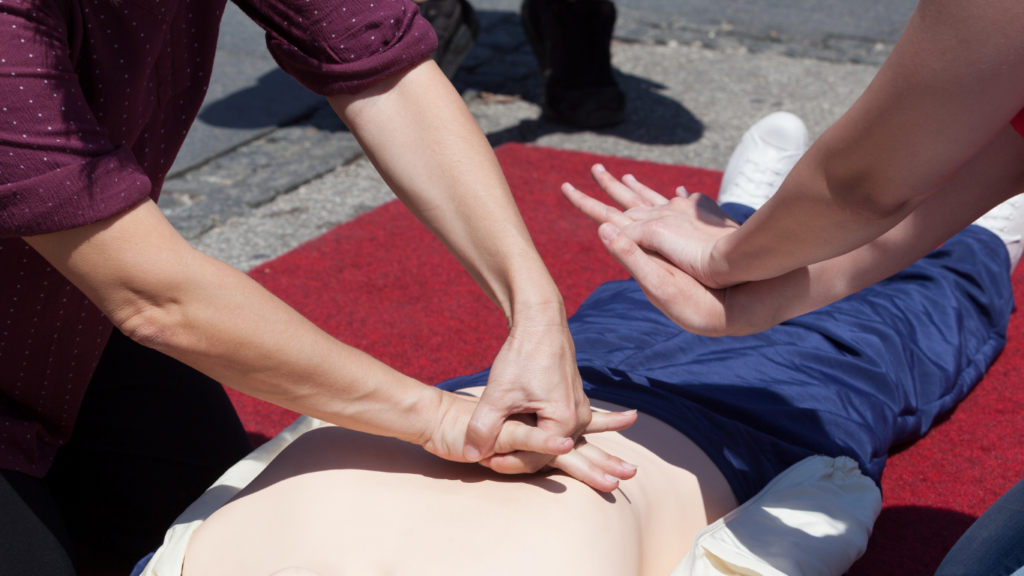
Learning CPR goes beyond understanding the steps—it requires hands-on practice and expert guidance to build confidence and proper technique.
Amara Career Training offers instructor-led CPR and First Aid certification courses that combine practical training, real-world scenarios, and personalized instruction to help individuals and teams prepare for emergencies with confidence.
Experience the difference that hands-on training can make.