
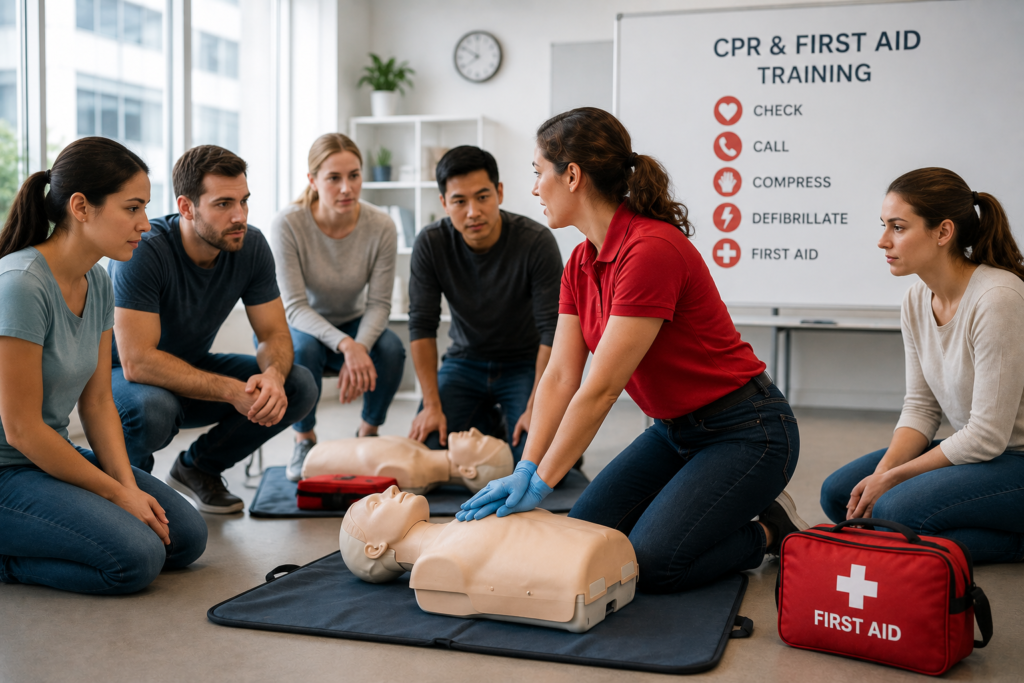
If you’ve never attended a CPR and First Aid certification class before, it’s normal to have questions about what the experience will be like.
Many people wonder:
- Will the training be difficult?
- Do I need prior medical experience?
- How much hands-on practice is involved?
- What skills will I learn?
The good news is that CPR and First Aid certification classes are designed to be practical, interactive, and easy to follow, regardless of your experience level.
Here’s a step-by-step look at what you can expect during a typical CPR and First Aid certification course.
Why CPR & First Aid Training Matters
Emergencies can happen anywhere—at work, at home, or in public places.
CPR and First Aid training provide participants with the knowledge and practical skills needed to respond effectively during medical emergencies until professional help arrives.
Whether you’re a healthcare professional, caregiver, teacher, construction worker, or office employee, these skills can help you act with confidence when every second counts.
Step 1: Course Introduction and Overview
Most CPR and First Aid certification classes begin with an introduction to the course objectives.
Your instructor will explain:
- What you’ll learn
- How the class is structured
- Safety considerations during training
- Certification requirements
This portion helps participants understand what to expect and creates a comfortable learning environment.
Step 2: Learning to Recognize Emergencies
Before responding to an emergency, it’s important to recognize when someone needs help.
Participants learn how to identify:
- Cardiac arrest
- Choking emergencies
- Severe bleeding
- Unresponsiveness
- Breathing difficulties
Understanding the signs of an emergency helps ensure a faster and more effective response.
Step 3: CPR Instruction and Demonstration
The instructor will demonstrate proper CPR techniques and explain the key steps involved.
Topics typically include:
- Assessing the scene for safety
- Checking responsiveness
- Calling for emergency assistance
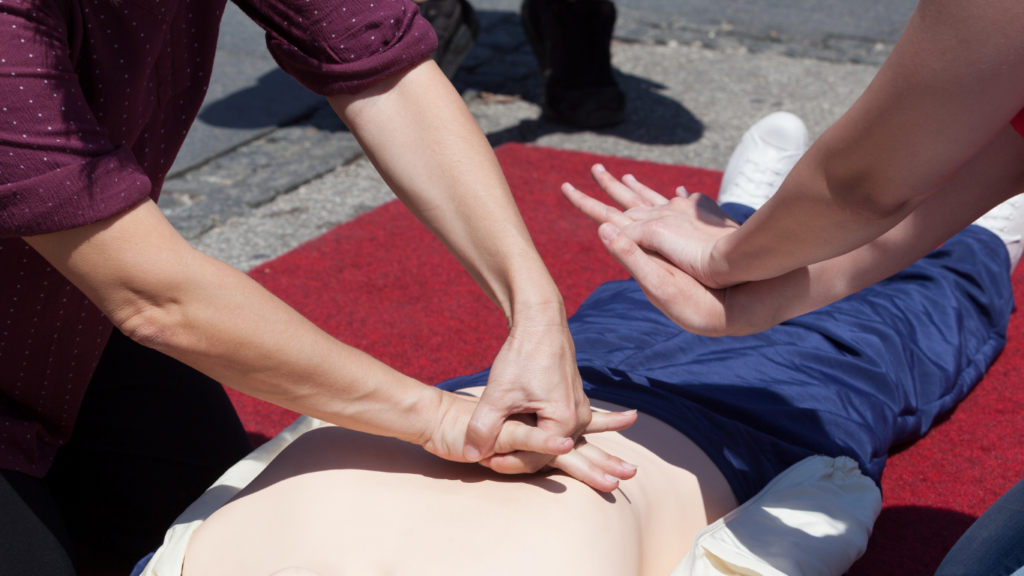
- Performing chest compressions
- Providing rescue breaths (if applicable)
Participants are encouraged to ask questions throughout the training.
Step 4: Hands-On CPR Practice
This is often the most valuable part of the class.
Participants practice CPR skills on training manikins while receiving guidance from the instructor.
Hands-on practice helps build:
- Proper technique
- Muscle memory
- Confidence
- Emergency response readiness
Most participants find this portion engaging because it allows them to apply what they’ve learned in a realistic setting.
Step 5: AED Training
Many CPR certification courses also include training on how to use an Automated External Defibrillator (AED).
Participants learn:
- When an AED should be used
- How to operate the device safely
- How AEDs work alongside CPR
AEDs are designed to be user-friendly, and training helps remove uncertainty about using them during emergencies.
Step 6: First Aid Skills Training
In addition to CPR, participants learn basic First Aid techniques for common emergencies.
Topics may include:
- Controlling bleeding
- Treating minor injuries
- Responding to burns
- Managing choking incidents
- Handling medical emergencies until help arrives
These skills help participants feel better prepared for a wide range of situations.
Step 7: Scenario-Based Practice
Many classes include realistic emergency scenarios that allow participants to practice applying their skills.
Scenario training helps participants:
- Make decisions under pressure
- Improve communication
- Work as a team
- Build confidence in real-world situations
These exercises often become one of the most memorable parts of the training experience.
Step 8: Skills Evaluation and Certification
At the end of the course, participants typically complete a skills assessment and any required evaluations.
The purpose is not to create stress but to ensure participants understand the key concepts and can demonstrate essential skills.
Once course requirements are successfully completed, participants receive their CPR and First Aid certification.
Do You Need Medical Experience?
Absolutely not.
CPR and First Aid classes are designed for individuals from all backgrounds.
Whether you’re a healthcare worker, caregiver, office employee, teacher, construction worker, or business owner, the course provides clear instruction that is easy to follow and understand.
The focus is on building practical skills that anyone can learn.
Benefits of Attending a CPR & First Aid Certification Class
Participants often leave training with more than just a certification.
Many report:
- Greater confidence during emergencies
- Improved safety awareness
- Better preparedness
- Increased ability to help others
These benefits extend beyond the workplace and can be valuable in everyday life.
Ready to Get CPR & First Aid Certified?
Whether you’re training as an individual or preparing an entire team, CPR and First Aid certification provides valuable skills that can help save lives.
Amara Career Training offers on-site CPR and First Aid certification courses designed to provide hands-on instruction, practical experience, and the confidence needed to respond effectively during emergencies.
Take the first step toward becoming prepared for the moments that matter most.