
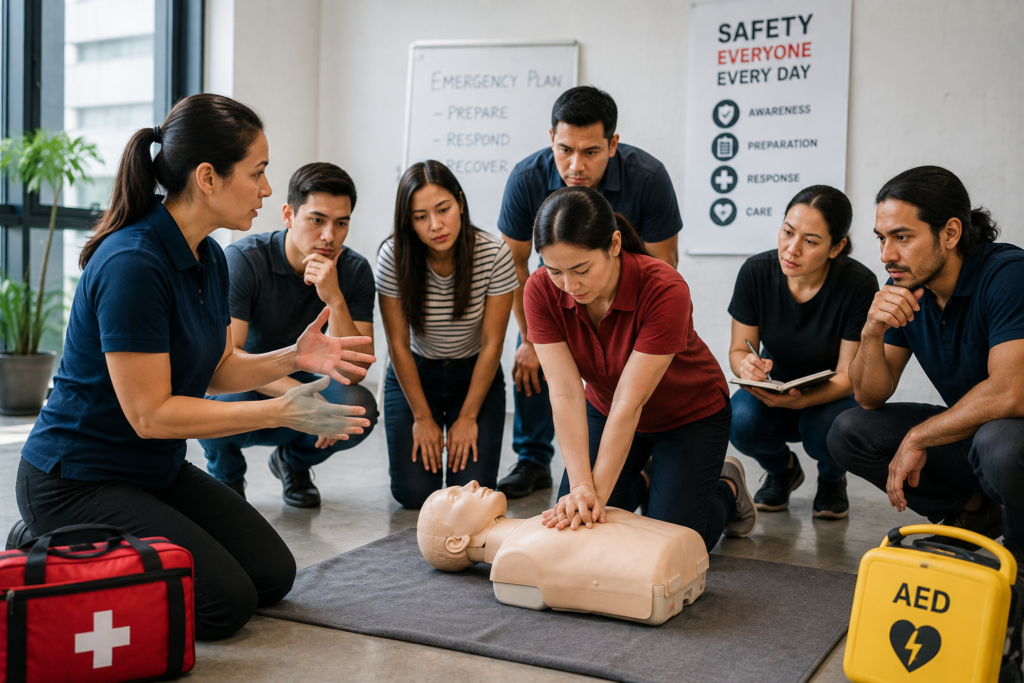
A strong workplace safety culture goes beyond having safety policies, posters, and procedures in place. It is built through the everyday actions of employees and leaders who understand the importance of being prepared.
When an emergency happens, employees need more than instructions on a page. They need the knowledge, confidence, and practical skills to know how to respond.
That is where emergency response training plays an important role.
CPR and First Aid training can help organizations create a workforce that is more prepared, more confident, and more committed to protecting one another.
What Is a Workplace Safety Culture?
A workplace safety culture refers to the shared attitudes, behaviors, and practices that influence how an organization approaches safety.
A strong safety culture means employees understand that safety is everyone’s responsibility, not just the responsibility of management or the safety department.
It can be reflected in everyday behaviors such as:
- Following established safety procedures
- Reporting hazards
- Communicating concerns
- Participating in safety training
- Knowing how to respond during emergencies
- Looking out for coworkers
When safety becomes part of the workplace culture, employees are more likely to take an active role in maintaining a safe environment.
Prepared Employees Are an Important Part of Safety Culture
Policies and emergency procedures are valuable, but they are only effective when employees know how to put them into action.
Imagine an employee suddenly collapses at work.
Would coworkers know what to do?
Would someone immediately call emergency services?
Would another employee know where the AED is located?
Would someone be confident enough to begin CPR?
Emergency response training helps answer these questions before an emergency happens.
Employees who have practiced emergency response skills are more likely to feel prepared to take appropriate action when needed.
Training Builds Confidence
One of the biggest barriers to effective emergency response is hesitation.
Employees may worry about making a mistake or may simply not know what to do.
Hands-on CPR and First Aid training gives employees the opportunity to practice important skills in a controlled environment.
Through repeated practice, employees can become more comfortable with:
- Recognizing emergencies
- Performing CPR
- Using an AED
- Responding to choking
- Providing basic First Aid
- Communicating during an emergency
This practical experience can turn uncertainty into confidence.
Training Encourages Employees to Take Responsibility
A strong safety culture depends on employees being willing to participate.
When employees receive emergency response training, they gain skills that allow them to play an active role in workplace safety.
Instead of thinking:
“Someone else will handle it.”
Employees may feel more prepared to think:
“I know what I can do to help.”
That shift in mindset can strengthen accountability and encourage employees to look out for one another.
Emergency Training Strengthens Teamwork
Workplace emergencies often require more than one person.
One employee may call 911 while another begins CPR. Someone else may retrieve an AED, direct emergency responders, or help keep the surrounding area clear.
Training gives employees an opportunity to practice communicating and coordinating during stressful situations.
This can help teams become more comfortable with:
- Delegating responsibilities
- Communicating clearly
- Working together under pressure
- Following emergency procedures
A team that knows how to work together during an emergency is better prepared to respond when something unexpected happens.
Safety Training Shows Employees That Their Well-Being Matters
When employers invest in CPR and First Aid training, they demonstrate that employee safety is more than a statement in a handbook.
It shows employees that their well-being is a priority.
Organizations that consistently invest in employee development and safety can create an environment where people feel supported and encouraged to take safety seriously.
This can contribute to greater employee trust and engagement.
Training Helps Leaders Build a Proactive Safety Culture
Strong safety leadership isn’t only about responding to accidents after they happen.
It’s about identifying potential risks and preparing employees before something goes wrong.
Emergency response training is one way leaders can take a proactive approach to workplace safety.
Instead of asking:
“What will we do if an emergency happens?”
leaders can help their teams answer:
“Are we prepared if an emergency happens today?”
That shift from reaction to preparation is an important part of building a stronger safety culture.
Make Emergency Preparedness Part of Ongoing Safety Efforts
Safety training shouldn’t be treated as a one-time event.
Employees change. Procedures evolve. Skills can fade without practice.
Organizations can strengthen emergency preparedness by:
- Keeping CPR and First Aid certifications current
- Providing refresher training
- Reviewing emergency procedures regularly
- Making emergency equipment easy to locate
- Conducting safety drills
- Encouraging employees to ask safety-related questions
Ongoing reinforcement helps keep emergency preparedness visible and relevant.
The Benefits Extend Beyond Emergencies
CPR and First Aid training are primarily designed to prepare employees for medical emergencies, but the benefits can extend further.
Training can help employees develop:
- Confidence
- Communication skills
- Teamwork
- Situational awareness
- Leadership
- Responsibility
These qualities can contribute to a stronger workplace culture overall.
Why Employers Should Invest in Emergency Response Training
For employers and HR leaders, emergency response training is more than another item to add to a training calendar.
It is an opportunity to strengthen the organization’s approach to safety while giving employees practical skills they can use when they matter most.
A prepared workforce can help create an environment where employees understand that safety is something everyone contributes to.
Ready to Build a More Prepared Workplace?
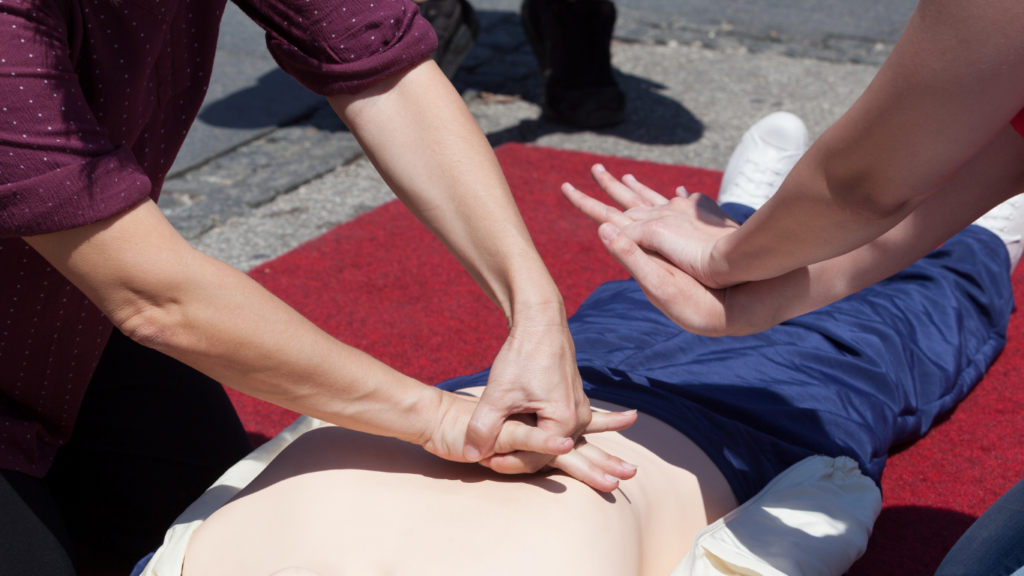
A strong safety culture starts with employees who know what to do when an emergency happens.
Amara Career Training offers on-site CPR and First Aid training designed to help organizations equip their teams with practical emergency response skills, build employee confidence, and strengthen workplace preparedness.
Give your employees the training they need to act with confidence when it matters most.
Prepare your people. Strengthen your safety culture.