
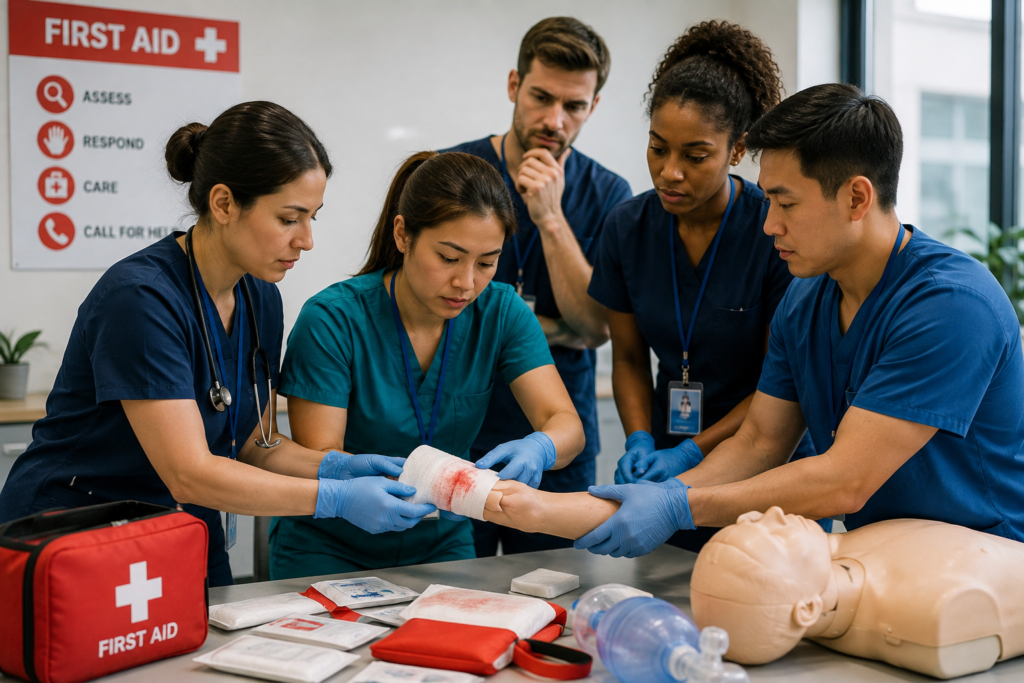
Healthcare professionals are trained to provide care in a wide range of situations, but emergencies don’t always involve cardiac arrest or the need for CPR.
Everyday incidents such as cuts, burns, falls, choking, or sudden illness can happen without warning. In these situations, knowing basic First Aid principles can help healthcare professionals respond promptly, protect the individual from further harm, and provide appropriate care while additional medical support is arranged.
CPR remains an essential emergency response skill, but comprehensive preparedness also means being ready for the many other situations that can occur in healthcare environments.
Here are some common First Aid situations every healthcare professional should be prepared to recognize and respond to.
1. Cuts and Severe Bleeding
Cuts and wounds can happen during routine patient care, equipment handling, or other workplace activities.
While a minor cut may require simple First Aid, significant bleeding requires immediate attention.
Healthcare professionals should know how to:
- Assess the severity of the bleeding
- Apply appropriate direct pressure
- Protect themselves from exposure to blood and bodily fluids
- Monitor the individual for signs of worsening condition
- Activate additional medical support when necessary
Quick recognition and appropriate response can help limit blood loss while further medical care is being provided.
2. Burns
Burns can result from hot liquids, equipment, chemicals, or other workplace hazards.
The appropriate response depends on the type and severity of the burn.
Healthcare professionals should understand how to recognize burns that require additional medical evaluation and how to provide appropriate initial care while avoiding actions that could cause further injury.
Proper First Aid knowledge can help prevent a relatively contained injury from becoming more complicated.
3. Choking
Choking can become life-threatening within minutes when a person’s airway is blocked.
Healthcare professionals should be prepared to recognize the signs of choking and respond according to current emergency response guidelines.
Training helps staff distinguish between a person who is coughing effectively and someone experiencing a severe airway obstruction.
Knowing what to do before a situation becomes critical can make a significant difference.
4. Falls and Possible Injuries
Falls are an important concern in many healthcare environments, particularly when caring for older adults or individuals with mobility challenges.
After a fall, staff should know how to assess the situation appropriately and recognize signs that may indicate a more serious injury.
Potential concerns can include:
- Head injuries
- Fractures
- Neck or spinal injuries
- Loss of consciousness
- Severe pain
- Changes in alertness or behavior
First Aid training helps staff understand when an individual may require immediate medical attention and why unnecessary movement can sometimes create additional risk.
5. Sprains and Strains
Healthcare workers may also encounter sprains, strains, and other musculoskeletal injuries involving patients, coworkers, or themselves.
Understanding basic First Aid principles can help staff provide appropriate initial support and recognize when professional evaluation may be necessary.
The goal is not to diagnose the injury but to provide safe initial care and prevent unnecessary worsening while appropriate medical assessment is arranged.
6. Sudden Illness or Loss of Consciousness
A person may suddenly become weak, confused, dizzy, or unconscious for many different reasons.
These situations require prompt assessment and appropriate escalation.
Healthcare professionals should be prepared to:
- Recognize changes in responsiveness
- Assess the situation according to their training and workplace procedures
- Request additional medical assistance
- Monitor the individual
- Be prepared to begin CPR if cardiac arrest is identified
Being able to recognize when a situation is becoming more serious is an important part of emergency preparedness.
7. Allergic Reactions
Allergic reactions can range from mild symptoms to potentially life-threatening emergencies.
Healthcare professionals should understand how to recognize signs of a severe reaction and follow the individual’s care plan and established emergency procedures.
Symptoms that may require urgent attention can include difficulty breathing, swelling of the face or throat, or rapidly worsening symptoms.
Early recognition is critical because severe allergic reactions can progress quickly.
8. Seizures
Witnessing a seizure can be frightening, especially for someone who has not been trained to respond appropriately.
Healthcare professionals should know how to protect the individual from immediate hazards, monitor the situation, and follow appropriate emergency procedures.
Importantly, First Aid response during a seizure focuses on protecting the person from injury and recognizing when emergency medical assistance is needed, rather than attempting to restrain the individual.
9. Heat-Related Illness
Heat exhaustion and heat-related emergencies can occur in healthcare workplaces, outdoor environments, and facilities where temperature control is limited.
Healthcare professionals should be able to recognize warning signs and respond according to established First Aid procedures.
Early recognition is particularly important because some heat-related conditions can become serious if not addressed promptly.
10. When First Aid Isn't Enough
One of the most important skills healthcare professionals can develop is knowing when an emergency requires additional medical intervention.
First Aid is not a replacement for professional medical evaluation.
Healthcare workers should understand their scope of practice and follow their organization’s emergency response procedures.
Emergency medical services or additional clinical support may be necessary when an individual:
- Is unresponsive
- Has difficulty breathing
- Experiences cardiac arrest
- Has severe bleeding
- Has a serious injury
- Shows signs of a life-threatening allergic reaction
- Experiences another rapidly worsening condition
Knowing when to escalate is just as important as knowing what initial action to take.
Why Healthcare Professionals Need More Than CPR Training
CPR is an essential emergency response skill, but healthcare professionals encounter many situations that don’t begin with cardiac arrest.
First Aid training broadens emergency preparedness by helping staff develop skills for responding to common injuries and medical situations.
Together, CPR and First Aid training can help healthcare teams become more prepared to:
- Recognize emergencies
- Respond appropriately
- Communicate effectively
- Work as a team
- Know when to seek additional assistance
A well-rounded emergency response skill set helps healthcare professionals feel more prepared for the unexpected.
Ready to Strengthen Your Healthcare Team's Emergency Preparedness?
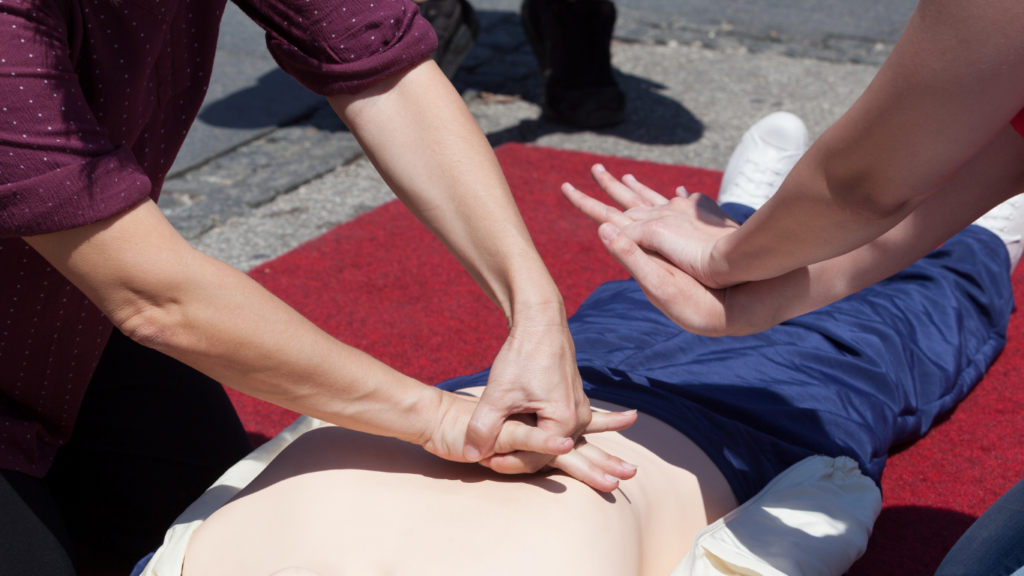
Healthcare professionals need more than theoretical knowledge to feel confident during unexpected situations. Hands-on CPR and First Aid training helps teams practice essential emergency response skills and prepare for a variety of real-world scenarios.
Amara Career Training offers CPR and First Aid training designed to help healthcare professionals and teams build practical skills, strengthen emergency preparedness, and respond with greater confidence when unexpected situations arise.
Give your team the skills they need to be ready beyond CPR.