

Healthcare organizations invest in equipment, technology, staffing, and employee development to provide quality care and maintain safe working environments.
But one investment that can sometimes be overlooked is emergency response training.
CPR and First Aid training can provide value beyond the certificate employees receive. For healthcare organizations, having prepared employees can support faster recognition of emergencies, more confident responses, stronger teamwork, and a workplace culture that prioritizes safety.
While no training can guarantee a particular outcome during an emergency, preparing employees with practical skills can help organizations become better equipped to respond when unexpected situations occur.
For healthcare decision-makers, the question isn’t simply, “How much does CPR and First Aid training cost?”
It is also:
“What value does having a prepared team bring to our organization?”
What Does ROI Mean When It Comes to Employee Training?
Return on investment, or ROI, is often associated with revenue, productivity, or cost savings.
However, employee training can create value in ways that aren’t always reflected in a simple dollar amount.
For CPR and First Aid training, potential organizational benefits include:
- Stronger emergency preparedness
- Increased employee confidence
- Better team coordination
- Greater awareness of workplace safety
- Reduced uncertainty during emergencies
- Support for organizational safety policies
- More employees equipped with practical emergency response skills
The value of training isn’t only about what happens during an emergency. It can also contribute to how employees think about preparedness every day.
Prepared Employees Are an Important Safety Resource
Healthcare professionals may encounter unexpected medical situations as part of their work.
A patient, visitor, coworker, or other individual could experience a sudden medical emergency requiring immediate attention.
In those situations, trained employees may be among the first people available to respond.
CPR and First Aid training can help employees learn how to recognize emergencies, activate appropriate emergency procedures, and provide immediate assistance within the scope of their training.
Having multiple trained employees also means emergency response knowledge isn’t concentrated in only one or two individuals.
A prepared team creates a broader safety resource within the organization.
CPR Training Can Help Employees Respond With Greater Confidence
Knowing what to do and feeling prepared to do it are not always the same thing.
An employee may understand that CPR is important but still hesitate during an actual emergency if they have never practiced the skill.
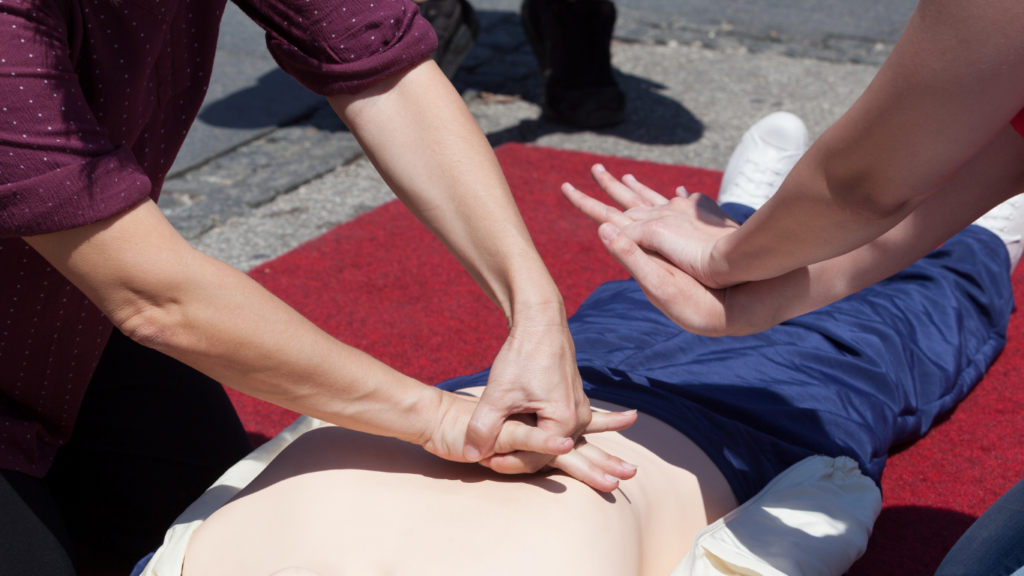
Hands-on training gives employees the opportunity to practice emergency response techniques in a controlled environment.
This can help employees become more familiar with:
- Recognizing cardiac emergencies
- Performing CPR
- Using an AED when appropriate and available
- Communicating with team members
- Following emergency response procedures
Training cannot eliminate the stress of an emergency, but familiarity and practice can help reduce uncertainty.
First Aid Training Extends Preparedness Beyond Cardiac Emergencies
Healthcare emergencies aren’t limited to cardiac arrest.
Employees may encounter situations involving:
- Bleeding
- Burns
- Choking
- Falls
- Sudden illness
- Allergic reactions
- Seizures
- Other injuries or medical emergencies
First Aid training helps broaden an organization’s emergency preparedness beyond CPR.
Instead of preparing employees for only one type of emergency, organizations can develop a workforce with a wider understanding of appropriate immediate response.
Training Can Strengthen Team Coordination
An emergency rarely involves just one person.
Depending on the situation, several employees may need to work together.
One person may contact emergency services while another retrieves an AED or First Aid supplies. Another employee may assist with the surrounding environment or communicate with a supervisor.
Training gives teams opportunities to practice responding to emergency scenarios and communicating under pressure.
Clearer Roles Can Reduce Confusion
When employees understand their emergency response responsibilities, they may be better prepared to coordinate their actions.
Training can help teams become familiar with the importance of communication, delegation, and following established emergency procedures.
Practice Encourages Team Readiness
Regular opportunities to practice emergency skills can help keep preparedness visible within the organization.
This can contribute to a workplace where safety is treated as an ongoing responsibility rather than something employees think about only after an incident occurs.
CPR and First Aid Training Supports a Stronger Safety Culture
A safety culture is built through everyday actions.
When healthcare organizations consistently invest in employee education and emergency preparedness, they demonstrate that employee and patient safety are organizational priorities.
CPR and First Aid training can become part of a larger safety strategy that includes:
- Emergency response procedures
- Safety education
- Appropriate emergency equipment
- Workplace hazard awareness
- Regular skills practice
- Ongoing employee development
For more on this topic, see our article How Emergency Response Training Supports a Stronger Workplace Safety Culture.
INTERNAL LINK: Link the bold title to your existing blog.
Training Can Help Reduce Risk From Unprepared Responses
Healthcare organizations cannot eliminate every emergency.
However, organizations can take steps to prepare employees for situations that may require immediate action.
Without training, employees may be uncertain about:
- When to activate emergency procedures
- Who should call for additional help
- Where emergency equipment is located
- How to respond to a cardiac emergency
- How to provide basic First Aid
Training gives employees an opportunity to learn these skills before they are needed.
This preparation can help organizations address one important part of risk management: being prepared to respond when an unexpected event occurs.
The Cost of Training Should Be Viewed in Context
Every organization has a training budget.
Decision-makers naturally need to consider the cost of instructor time, employee time, training materials, and other expenses associated with CPR and First Aid certification.
But evaluating training based only on its upfront cost provides an incomplete picture.
Organizations should also consider the potential value of:
- A more prepared workforce
- Greater employee confidence
- Stronger emergency readiness
- Improved team coordination
- Support for workplace safety initiatives
- Employees with current emergency response skills
The goal isn’t to claim that CPR training eliminates workplace risk or guarantees a particular outcome.
Instead, the goal is to recognize that preparedness itself has organizational value.
Why Hands-On Training Matters
CPR and First Aid are practical skills.
Employees need more than information about what they should do. They need opportunities to practice how to respond.
Hands-on training allows participants to:
- Practice CPR techniques
- Work with CPR manikins
- Practice AED-related skills
- Work through First Aid scenarios
- Ask questions
- Receive instructor feedback
- Become more familiar with emergency procedures
This practical experience can make training more relevant to the situations employees may encounter in their work.
You can also learn more about Why Hands-On Training Is More Effective Than Online-Only CPR Courses.
Why Regular Training Matters
Emergency response skills can become less familiar when they aren’t practiced regularly.
For healthcare organizations, maintaining a training schedule can help keep emergency preparedness on the team’s radar.
Regular training can provide opportunities to refresh knowledge, practice skills, and ensure employees understand current workplace procedures.
Learn more about Why CPR Skills Fade Over Time Without Regular Practice.
What Healthcare Leaders Should Consider
When evaluating CPR and First Aid training, healthcare decision-makers can consider more than the price of the course.
How many employees should be trained?
Consider staffing levels, shifts, departments, and the organization’s emergency preparedness needs.
Does the training include hands-on practice?
Practical skill development is particularly important for CPR and First Aid.
How will training fit into our schedule?
Training should be planned in a way that supports employee participation while minimizing unnecessary disruption to operations.
How will we maintain these skills?
Organizations should consider how they will track certifications, refresher training, and ongoing emergency preparedness.
Does the training align with our workplace needs?
Healthcare organizations should select training appropriate to their employees, responsibilities, and applicable workplace requirements.
Final Thoughts
CPR and First Aid training is more than a certification requirement or another item on an employee training checklist.
For healthcare organizations, it can be an investment in preparedness, confidence, teamwork, and workplace safety.
No organization can predict when an emergency will happen, and no training program can guarantee a specific outcome.
What organizations can do is prepare their employees to recognize emergencies and respond appropriately within the scope of their training.
When healthcare leaders invest in prepared teams, they aren’t simply paying for a course.
They’re investing in people who may be better prepared to respond when an unexpected emergency occurs.
Ready to Invest in a More Prepared Healthcare Team?
Your employees are one of your organization’s most important safety resources.
Amara Career Training provides hands-on CPR and First Aid training designed to help healthcare teams develop practical emergency response skills, build confidence, and strengthen workplace preparedness.
Whether you’re training a small team or coordinating training for an entire facility, we can help you create a practical training experience around your organization’s needs.
Invest in prepared employees. Strengthen your team’s emergency readiness.
Contact Amara Career Training to learn more about CPR and First Aid training for your healthcare team.