
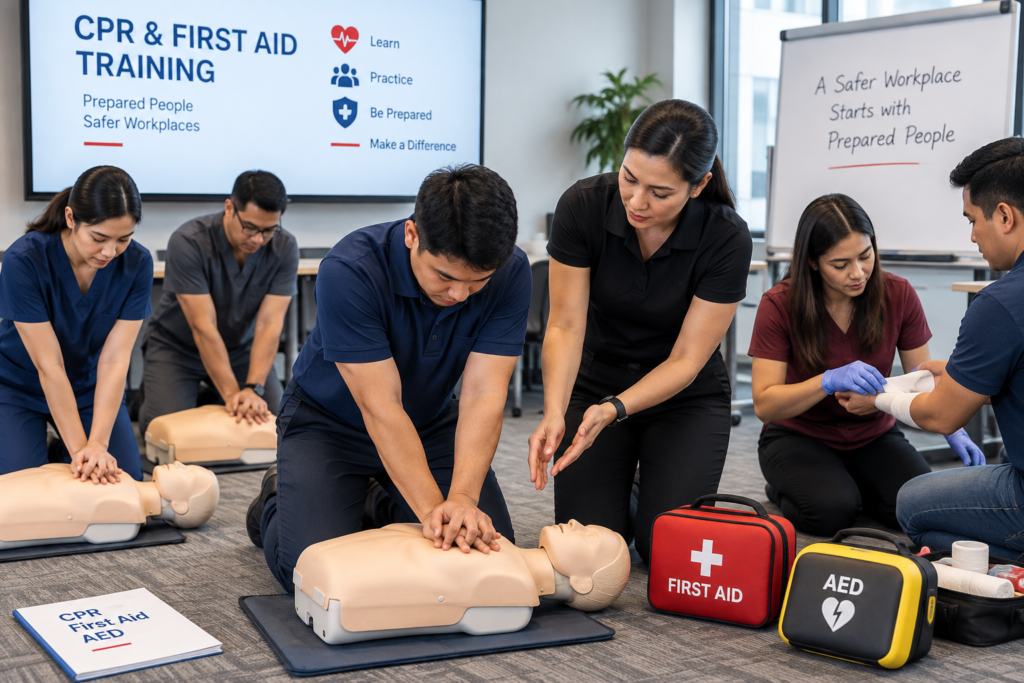
Workplace emergencies can happen unexpectedly, and having a First Aid kit or emergency equipment available is only one part of being prepared.
Employees also need to know how to respond when someone experiences a medical emergency.
That is where a structured workplace CPR and First Aid training plan can make a difference.
Instead of treating CPR and First Aid training as a one-time requirement, employers can build an organized program that considers employee roles, training schedules, certification renewals, and ongoing preparedness.
A well-planned approach can help organizations make sure the right employees receive appropriate training and that important certifications don’t get overlooked.
Why Employers Need a CPR and First Aid Training Plan
Sending employees to a CPR or First Aid class once does not necessarily create a complete emergency preparedness program.
Employees change roles. New employees join the organization. Certifications expire. Teams work different shifts. Workplace responsibilities can also change over time.
Without a structured plan, employers may lose track of who is trained, when certifications expire, and which employees still need training.
A training plan can help employers organize these responsibilities and make emergency preparedness part of their regular workplace safety process.
Step 1: Identify Which Employees Need Training
The first step is determining who should receive CPR and First Aid training.
Not every employee may have the same responsibilities or training needs.
Consider:
- Employees who work directly with customers, clients, or patients
- Supervisors and managers
- Employees working in higher-risk environments
- Staff members who may be responsible for emergency response
- Employees working in remote areas of a facility
- Team members working different shifts
- New employees who have not yet received training
Employers should also consider any applicable workplace requirements or organizational policies when determining training needs.
Consider Different Shifts and Locations
A common mistake is training employees from only one shift or department.
If an emergency occurs during another shift, there should still be appropriately trained personnel available according to the organization’s emergency response plan.
For organizations with multiple locations, employers should also consider whether each site has adequate emergency response coverage.
Step 2: Determine the Right Type of Training
Once you know who needs training, determine which courses are appropriate for each employee group.
Depending on the workplace and employee responsibilities, this may include:
- CPR training
- AED training
- First Aid training
- CPR and First Aid combination training
- Additional emergency response training based on workplace needs
The appropriate training should match the responsibilities and environment of the employees receiving it.
For example, an employee who may be expected to respond to a cardiac emergency may need CPR and AED training, while other employees may require a broader combination of CPR and First Aid skills.
Step 3: Choose a Training Format That Works for Your Team
Employers should also consider how training will be delivered.
Training may take place at a training center or directly at the workplace.
On-Site CPR and First Aid Training
On-site training brings the instructor directly to your workplace.
This can be particularly convenient for organizations with multiple employees because staff members can participate at the same location.
Potential benefits include:
- Less employee travel
- Easier scheduling
- Group training at one location
- Hands-on practice in a familiar environment
- Greater convenience for employers and employees
For larger teams, on-site training can also make it easier to coordinate training around work schedules.
You can learn more about How On-Site CPR Training Minimizes Workplace Disruptions During Emergencies.
Step 4: Create a Training Schedule
Once employees and training types have been identified, create a schedule.
Avoid waiting until a certification is about to expire before thinking about renewal.
Instead, maintain a training calendar that includes:
- Employee name
- Training type
- Certification date
- Certification expiration date
- Renewal or refresher date
- Department or location
- Training provider
- Notes about upcoming training
This makes it easier for managers or HR teams to identify upcoming training needs.
Plan Around Certification Expiration Dates
Keeping track of expiration dates is an important part of maintaining an organized training program.
Employers can establish reminders well before certifications expire so employees have enough time to complete the appropriate training.
This helps prevent last-minute scheduling problems and reduces the chance of having gaps in the organization’s trained workforce.
For more information about certification timelines, see How Often Should Staff Renew CPR Certification?
Step 5: Make Training Part of Employee Onboarding
CPR and First Aid training shouldn’t only be considered when an employee’s certification is about to expire.
For organizations where emergency response training is part of the employee’s role, consider including it in the onboarding process.
New employees can be evaluated based on the training requirements associated with their position.
This creates a more consistent process:
New employee → Identify training needs → Schedule training → Track certification → Plan renewal
Having a defined process can make it easier for HR teams and managers to maintain training records.
Step 6: Keep Training Records Organized
A training plan is only effective if employers can easily determine who is trained and who needs training.
Maintain an organized record of:
- Employee name
- Course completed
- Certification type
- Date completed
- Expiration date
- Training provider
- Renewal status
For organizations with larger teams, a centralized spreadsheet, HR system, or training management platform can make tracking easier.
The goal is to avoid relying on individual employees to remember when their certifications expire.
Step 7: Include Hands-On Practice
CPR and First Aid are practical skills.
Simply completing an online module or reading emergency procedures may not provide employees with enough opportunity to practice physical response skills.
Hands-on training allows employees to practice skills in a controlled environment and receive guidance from an instructor.
Employees can become more familiar with:
- CPR techniques
- AED procedures
- First Aid response
- Emergency communication
- Team coordination
- Appropriate response procedures
For a deeper look at the value of practical learning, read Why Hands-On Training Is More Effective Than Online-Only CPR Courses.
Step 8: Review Your Emergency Response Plan
CPR and First Aid training should connect with the organization’s broader emergency response plan.
Employees should know how training fits into the workplace’s emergency procedures.
Consider reviewing:
- How employees contact emergency services
- Where AEDs are located
- Where First Aid supplies are stored
- Who is responsible for emergency coordination
- How employees communicate during an emergency
- How emergency responders access the facility
- How emergency procedures are reviewed and updated
Training and emergency procedures should support each other.
Step 9: Review the Training Plan Regularly
A training plan should not be something you create once and never revisit.
Review it periodically to account for:
- New employees
- Employees who leave the organization
- Expired certifications
- Changes in job responsibilities
- New workplace locations
- Changes to emergency procedures
- Updated organizational safety policies
Regular reviews can help employers identify gaps before an emergency occurs.
Common Mistakes Employers Should Avoid
Even organizations that provide CPR and First Aid training can run into avoidable problems.
Training Everyone at Once Without Considering Coverage
Training a large group at one time may leave certain shifts or departments without trained employees while others are away in class.
Consider how training schedules affect workplace coverage.
Waiting Until Certifications Expire
Last-minute renewal can create unnecessary scheduling pressure.
Use reminders and plan ahead.
Focusing Only on Certificates
A certificate shows that an employee completed training, but maintaining practical skills also requires continued awareness and practice.
Forgetting New Employees
New hires should be reviewed for applicable training requirements as part of the onboarding process.
Not Updating Training Records
An outdated training spreadsheet can make it difficult to determine who is currently trained.
Keep employee records current.
How a Structured Training Plan Supports Workplace Safety
A structured training plan helps employers move from a reactive approach to a more organized approach to emergency preparedness.
Instead of asking:
“Who is trained right now?”
Employers can maintain a clear system that answers:
- Who needs training?
- What training do they need?
- When was their last training?
- When does it expire?
- When should they renew?
- Which employees still need to be scheduled?
That visibility can make emergency preparedness easier to manage.
Final Thoughts
CPR and First Aid training is most effective when it is treated as an ongoing part of workplace safety rather than a one-time event.
An effective workplace training plan should identify who needs training, determine the appropriate courses, establish a schedule, track certifications, provide hands-on practice, and regularly review emergency preparedness procedures.
By creating a structured process, employers can make it easier to maintain a workforce that is prepared to respond when an unexpected emergency occurs.
Preparedness starts with training, but a strong training program starts with a plan.
Ready to Build a More Prepared Workplace?
Managing employee training doesn’t have to be complicated.
Amara Career Training provides CPR and First Aid training for organizations looking to equip their employees with practical emergency response skills.
Whether you’re training a new group of employees, updating certifications, or organizing training for your entire team, our hands-on sessions can help make workplace training more convenient and accessible.
Build your training plan. Prepare your employees. Strengthen your workplace safety program.
Contact Amara Career Training to learn more about CPR and First Aid training for your organization.
Ready to Strengthen Workplace Safety and Emergency Preparedness?

Lorem ipsum dolor sit amet, consectetur adipiscing elit. Ut elit tellus, luctus nec ullamcorper mattis, pulvinar dapibus leo.