
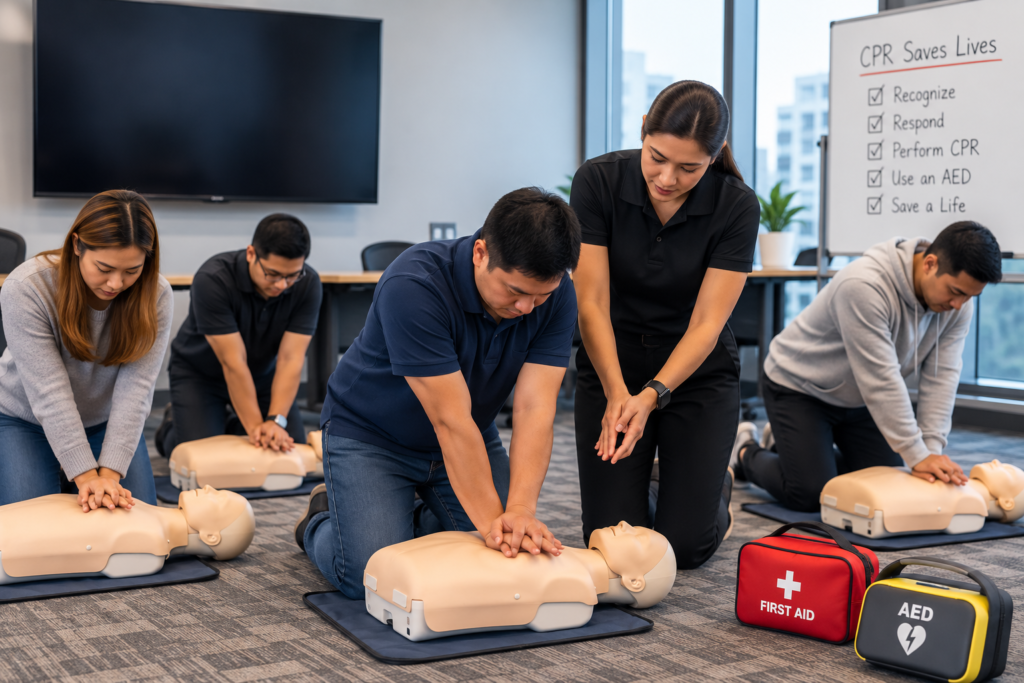
How On-Site CPR Training Minimizes Workplace Disruptions During Emergencies
Workplace emergencies can happen without warning. A sudden cardiac emergency, serious injury, choking incident, or other medical situation can quickly interrupt normal operations and create stress for employees and management.
While employers cannot predict every emergency, they can prepare their teams to respond appropriately when one occurs.
On-site CPR training gives employees the opportunity to develop practical emergency response skills without requiring the entire team to travel to an off-site training location. By bringing training directly to the workplace, organizations can strengthen preparedness while making training more convenient for their employees.
A prepared team can respond more confidently, communicate more effectively, and help support a more organized response during an emergency.
How Workplace Emergencies Can Disrupt Operations
A medical emergency affects more than the person who needs assistance.
Depending on the situation, an emergency may:
- Interrupt normal work activities
- Require employees to leave their workstations
- Create confusion among team members
- Require supervisors to coordinate emergency procedures
- Delay projects or services
- Require emergency medical services to respond to the workplace
- Cause additional stress among employees
The goal of emergency preparedness isn’t to prevent every disruption. Instead, it is to help organizations respond in a more organized and effective way when an unexpected event occurs.
Why On-Site CPR Training Matters for Employers
On-site CPR training allows employers to train employees in their own workplace rather than requiring staff to travel to an outside location.
This approach can make training easier to coordinate, particularly for organizations with multiple employees or teams working different schedules.
On-site training can help employers:
- Train multiple employees at the same location
- Reduce travel time for staff
- Minimize time away from normal work activities
- Provide hands-on practice in a convenient setting
- Encourage more employees to participate in emergency response training
When training is easier to access, organizations may find it easier to make emergency preparedness part of their regular workplace safety efforts.
Prepared Teams Can Respond More Confidently
During an emergency, employees may experience stress, uncertainty, or hesitation.
Without training, someone witnessing a medical emergency may not know:
- What to do first
- Who should call 911
- Where emergency equipment is located
- When CPR may be needed
- How to use an AED
- How to communicate with other employees
Hands-on CPR and First Aid training gives employees an opportunity to practice essential response skills before they encounter a real emergency.
This preparation can help employees feel more confident about taking appropriate action within the scope of their training.
Employees can also learn more about the common reasons people hesitate during emergencies and how training can help in our article, 5 Reasons Employees Hesitate During Emergencies—and How Training Changes That.
CPR Training Can Help Reduce Delays During Medical Emergencies
In a serious medical emergency, employees may be the first people available to respond before emergency medical services arrive.
A trained employee may be able to recognize the emergency, activate the emergency response system, begin CPR when appropriate, and use an AED when available and appropriate.
These immediate actions can help support the response while professional medical assistance is on the way.
The purpose of workplace CPR training isn’t to replace emergency medical professionals. Instead, it prepares employees to take appropriate immediate action while waiting for professional help.
On-Site Training Helps Minimize Training-Related Downtime
Traditional training arrangements may require employees to travel to another location, coordinate transportation, and spend additional time away from the workplace.
With on-site CPR training, the instructor comes to the organization.
This can make scheduling more convenient and help employers train employees without requiring everyone to travel to a separate training facility.
For businesses with busy schedules, this convenience can make it easier to maintain employee training while minimizing unnecessary disruption to daily operations.
Emergency Preparedness Supports Business Continuity
Emergency preparedness is not only about responding to medical incidents. It can also support an organization’s ability to continue operating after an unexpected event.
Clear Roles Can Reduce Confusion
When employees understand emergency response procedures, they may be better prepared to communicate and coordinate during a critical situation.
One employee may contact emergency services while another retrieves an AED or First Aid supplies. Other team members may help keep the area clear or guide emergency responders to the appropriate location.
Training can help employees become more familiar with working together during emergencies.
Prepared Employees Can Help Maintain Order
Emergencies can create confusion, particularly when multiple people are unsure about what to do.
Employees with emergency response training may feel more comfortable following established procedures and communicating with their coworkers.
A more organized response can help reduce unnecessary confusion and allow the organization to focus on getting appropriate help to the person who needs it.
CPR Training Is Part of a Larger Workplace Safety Strategy
CPR training should not be viewed as a standalone solution to workplace safety.
It works alongside other safety measures, including:
- First Aid training
- Emergency action plans
- Accessible emergency equipment
- AED availability where appropriate
- Workplace safety procedures
- Employee safety education
- Regular emergency preparedness reviews
A comprehensive safety program combines prevention with preparedness.
Employers can learn more about the importance of emergency preparedness in our article on How Emergency Response Training Supports a Stronger Workplace Safety Culture.
Employers can also review workplace emergency preparedness guidance from OSHA when developing and evaluating their workplace safety procedures.
Why On-Site Training Is a Practical Option for Employers
For employers, convenience matters.
Getting employees trained shouldn’t create unnecessary logistical challenges.
With on-site CPR and First Aid training, organizations can coordinate training around their workplace needs and schedules while giving employees the opportunity to practice important emergency response skills.
This can be particularly useful for:
- Offices
- Healthcare organizations
- Assisted living communities
- Construction companies
- Warehouses
- Retail businesses
- Schools and childcare organizations
- Other workplaces with multiple employees
The specific training needs will depend on the workplace environment, employee responsibilities, and applicable requirements.
Investing in Prepared Employees Can Benefit Your Organization
The value of CPR training extends beyond the certificate employees receive.
Training can help organizations develop employees who are:
- More confident during emergencies
- More familiar with emergency procedures
- Better prepared to communicate under pressure
- More comfortable working as a team
- More aware of workplace safety
For employers, these benefits can contribute to a stronger safety culture and a more prepared workforce.
Emergency preparedness is an investment in people—and people are an important part of every organization’s ability to respond when unexpected situations occur.
Learn more about How CPR Training Improves Employee Confidence at Work and why confidence is an important part of emergency preparedness.
Final Thoughts
Workplace emergencies can interrupt normal operations, create uncertainty, and place significant pressure on employees and management.
Employers cannot eliminate every possible emergency, but they can prepare their teams to respond.
On-site CPR training provides a practical way for organizations to equip employees with hands-on emergency response skills while making training more convenient for the workplace.
Prepared employees can respond with greater confidence, communicate more effectively, and support a more organized emergency response.
The goal isn’t simply to minimize disruption. It’s to create a workplace where employees are better prepared to protect one another when an emergency happens.
Ready to Prepare Your Team Without Disrupting Your Workday?
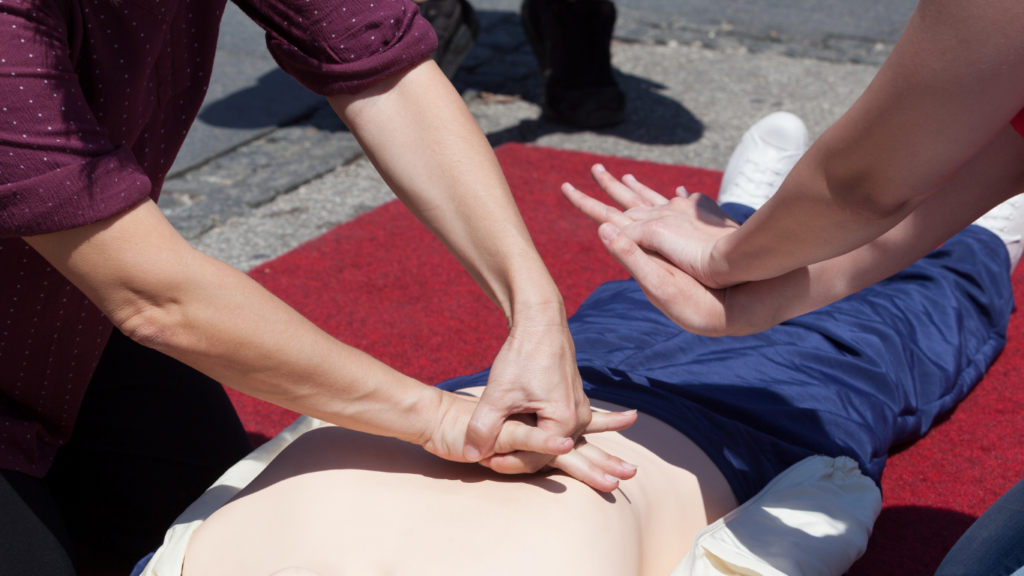
Your employees shouldn’t have to travel far to learn skills that could make a difference during a workplace emergency.
Amara Career Training offers on-site CPR and First Aid training designed to bring hands-on instruction directly to your workplace.
Our training helps employers equip their teams with practical emergency response skills while making scheduling and participation more convenient.
Train your team where they work. Build confidence. Strengthen workplace preparedness.