

Why Emergency Drills Should Be Part of Healthcare Staff Training
Healthcare emergencies can happen without warning. A patient may experience cardiac arrest, a visitor may suddenly collapse, or a medical situation may require several employees to respond at the same time.
Healthcare professionals may already know the correct emergency procedures, but knowing what to do and being able to coordinate those actions under pressure are two different things.
This is why healthcare emergency drills should be an important part of staff training and workplace preparedness.
Emergency drills give healthcare teams opportunities to practice their response procedures, understand their responsibilities, communicate with coworkers, and identify areas that need improvement.
While classroom instruction provides essential knowledge, practical exercises help employees become more familiar with applying that knowledge in realistic situations.
For healthcare organizations, combining CPR and First Aid training with regular emergency drills can support a more prepared, confident, and coordinated workforce.
Why Emergency Drills Matter in Healthcare Settings
Healthcare facilities operate in environments where unexpected emergencies can affect patients, visitors, and employees.
During a medical emergency, staff members may need to perform different responsibilities simultaneously. One employee may activate the emergency response system, another may retrieve an AED, while others provide appropriate assistance.
Without practice, employees may be uncertain about their responsibilities or how to coordinate with their coworkers.
Emergency drills help healthcare organizations evaluate how their teams respond to simulated situations before facing an actual emergency.
Some benefits include:
Improving familiarity with emergency procedures
Identifying communication gaps
Clarifying staff responsibilities
Practicing teamwork and coordination
Identifying equipment or accessibility issues
Helping employees recognize areas where additional training is needed
Drills also give managers an opportunity to evaluate whether their existing emergency procedures are practical and understandable.
Training and Emergency Drills Are Not the Same
Training and emergency drills serve different but complementary purposes.
Training focuses on developing knowledge and skills. Employees learn how to recognize emergencies, perform CPR, provide First Aid, use an AED, and follow appropriate response procedures.
Emergency drills focus on applying those skills and procedures in a simulated situation.
What Employees Learn During Training
During CPR and First Aid training, employees may learn:
How to recognize cardiac emergencies
How to perform CPR
How to use an AED
How to respond to choking
How to provide appropriate First Aid
How to activate emergency medical services
Hands-on instruction also gives participants opportunities to practice techniques and receive feedback.
What Employees Practice During Emergency Drills
During an emergency drill, employees can practice how to:
Recognize and report an emergency
Follow the facility’s emergency procedures
Communicate with other team members
Retrieve emergency equipment
Coordinate responsibilities
Respond to simulated emergency scenarios
Follow established procedures until the exercise ends
Training builds individual skills, while drills help teams practice working together.
Both are important parts of healthcare emergency preparedness.
5 Reasons Healthcare Facilities Should Conduct Emergency Drills
1. Improve Team Communication
Communication is essential during healthcare emergencies.
When multiple employees respond to the same situation, everyone needs to understand what is happening and what actions are being taken.
Emergency drills allow employees to practice communicating clearly, assigning responsibilities, and sharing important information.
For example, during a simulated cardiac emergency, one employee may activate the emergency response system while another retrieves an AED and appropriately trained personnel begin the response.
Practicing these responsibilities can help reduce confusion during an actual emergency.
2. Help Employees Understand Their Responsibilities
Not every employee has the same responsibilities during an emergency.
Depending on their roles and training, some employees may provide immediate assistance, while others coordinate communication, retrieve equipment, or guide emergency responders.
Drills help employees become more familiar with their assigned responsibilities.
They also give managers an opportunity to identify situations where roles are unclear or responsibilities overlap.
3. Identify Gaps in Emergency Procedures
An emergency procedure may look complete on paper but still present challenges when employees attempt to follow it.
For example:
Employees may not know where emergency equipment is stored.
Contact information may be outdated.
Staff may be unfamiliar with the emergency notification process.
Certain responsibilities may not be clearly assigned.
Communication between departments may be inconsistent.
Emergency drills help reveal these issues in a controlled environment.
Managers can use the findings to update procedures, improve communication, and address areas that require additional attention.
4. Build Familiarity With Emergency Equipment
Healthcare facilities may have AEDs, First Aid kits, emergency communication systems, and other equipment available for emergency situations.
However, employees should know where these resources are located and how to access them.
Depending on the drill scenario, staff can practice locating equipment and following the facility’s procedures.
This familiarity can help reduce unnecessary delays caused by uncertainty about where resources are stored.
5. Strengthen Confidence Through Practice
Even experienced healthcare employees can experience uncertainty during unexpected situations.
Practicing simulated emergencies gives employees opportunities to apply their knowledge without the pressure of an actual medical crisis.
Repeated practice can help make procedures more familiar and reinforce teamwork.
Emergency drills cannot eliminate stress, but they can help employees become more comfortable with their responsibilities and the response process.
Types of Emergency Drills Healthcare Facilities Can Conduct
Healthcare organizations can use different types of drills depending on their facility, staffing structure, and emergency preparedness needs.
Cardiac Emergency Response Drills
These exercises simulate a situation in which a patient or another individual experiences a suspected cardiac emergency.
Employees can practice activating the emergency response system, retrieving an AED, and coordinating the appropriate response according to their training and facility procedures.
Fire and Evacuation Drills
Fire drills help employees become familiar with evacuation procedures, designated routes, communication processes, and responsibilities for assisting individuals who may need additional support.
Severe Injury and First Aid Scenarios
These exercises allow employees to practice responding to simulated injuries such as severe bleeding, burns, falls, or other medical situations.
Staff can review how to activate emergency assistance and provide appropriate care within their training and responsibilities.
Communication and Coordination Exercises
Not every drill needs to involve a simulated physical emergency.
Healthcare managers can also conduct exercises focused on communication, notification procedures, staff responsibilities, and coordination between departments.
These exercises can help identify gaps in the organization’s emergency response process.
How to Organize an Effective Healthcare Emergency Drill
Emergency drills should have a clear purpose rather than simply being activities employees are asked to complete.
Healthcare managers can follow these steps when organizing a drill.
Step 1: Identify the Objective
Determine what the organization wants to evaluate.
For example, the objective may be to assess communication during a cardiac emergency or determine whether employees know how to locate an AED.
Step 2: Choose a Realistic Scenario
Select a scenario relevant to the facility and its operations.
Consider the types of emergencies employees may encounter and the responsibilities assigned to different staff members.
Step 3: Assign Responsibilities
Make sure participants understand their roles during the exercise.
Depending on the scenario, responsibilities may include communication, equipment retrieval, coordination, and following the facility’s established response procedures.
Step 4: Conduct the Exercise
Allow employees to work through the scenario according to the drill instructions.
The exercise should provide an opportunity to observe communication, teamwork, procedure awareness, and potential challenges.
Step 5: Review the Results
After the exercise, discuss what went well and what could be improved.
Managers can ask:
Did employees understand their responsibilities?
Were emergency procedures followed?
Was communication clear?
Could employees locate the necessary equipment?
Were there any unexpected delays or challenges?
Does the team need additional training?
Step 6: Make Improvements and Follow Up
Use the findings to improve emergency procedures and identify additional training needs.
Document relevant observations and assign responsibility for addressing identified issues.
The goal is to make each exercise an opportunity for continued improvement.
The Role of CPR and First Aid Training in Emergency Preparedness
Emergency drills are valuable, but employees also need the practical skills required to respond appropriately.
CPR and First Aid training provides employees with opportunities to develop these skills before participating in emergency response exercises.
Through appropriate training, employees can learn and practice:
CPR techniques
AED use
Recognizing cardiac emergencies
Responding to choking
Basic First Aid procedures
Emergency communication
Appropriate immediate response actions
Hands-on instruction is particularly important because employees need opportunities to practice physical skills, not just read about them.
For more information, read our article Why Hands-On Training Is More Effective Than Online-Only CPR Courses.
How Healthcare Managers Can Build a Culture of Continuous Preparedness
Emergency preparedness should not be treated as a one-time activity.
Healthcare managers can make it part of their organization’s ongoing staff development and safety practices.
Consider implementing the following:
Include appropriate emergency response training in employee onboarding.
Review staff CPR and First Aid certification records.
Organize emergency drills based on facility needs and applicable requirements.
Provide opportunities for hands-on skills practice.
Review emergency equipment accessibility.
Evaluate drill performance and address identified gaps.
Update emergency procedures when necessary.
Managers should also consider staffing patterns, different departments, and employees working evening, overnight, and weekend shifts.
A consistent approach helps ensure that emergency preparedness is not limited to one group of employees.
Common Mistakes to Avoid When Conducting Emergency Drills
Even well-planned exercises may be less effective when certain important details are overlooked.
Conducting Drills Without Clear Objectives
Employees should understand what the exercise is intended to evaluate. Without clear objectives, it may be difficult to identify meaningful improvements.
Failing to Review the Results
A drill should not end when the exercise is completed. Managers should review observations, discuss challenges, and identify follow-up actions.
Failing to Review the Results
A drill should not end when the exercise is completed. Managers should review observations, discuss challenges, and identify follow-up actions.
Ignoring Employees' Feedback
Employees who participate in drills may notice practical issues that managers haven’t considered. Encourage them to share observations and suggestions.
Focusing Only on Procedures and Not Practical Skills
Employees may understand emergency protocols but still need hands-on practice with CPR, AEDs, and First Aid.
Forgetting to Include Different Shifts
Emergency preparedness should account for employees working different schedules and departments, not only those available during regular business hours.
Final Thoughts
Healthcare emergencies require more than written procedures and classroom instruction.
Employees need opportunities to develop practical skills, understand their responsibilities, and practice coordinating with coworkers.
Healthcare emergency drills help bridge the gap between knowing what to do and practicing how to respond as a team.
When combined with appropriate CPR and First Aid training, regular emergency exercises can help healthcare organizations identify gaps, improve communication, and strengthen their overall preparedness.
For healthcare managers, the goal should be to create a workforce that doesn’t simply know the emergency procedures but has opportunities to practice them.
A prepared team is built through training, practice, and continuous improvement.
Prepare Your Healthcare Team With Amara Career Training
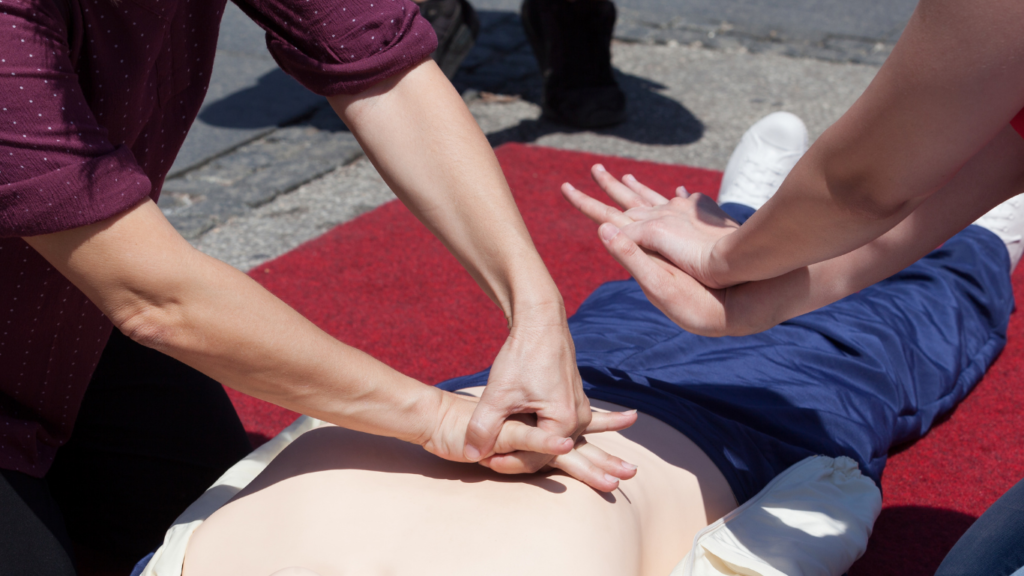
Emergency preparedness begins with employees who have the knowledge and practical skills to respond.
Amara Career Training provides CPR and First Aid training designed to help healthcare teams develop essential emergency response skills through hands-on instruction.
Whether you’re arranging initial training for new employees or coordinating training for an existing healthcare team, we can help you explore suitable training options for your organization.
Give your employees the opportunity to learn, practice, and strengthen their emergency response skills.
Invest in practical training. Build a prepared team. Strengthen workplace safety.
Contact Amara Career Training to learn more about CPR and First Aid training for your healthcare organization.