

5 Emergency Response Skills Every Construction Supervisor Should Know
Construction sites can change quickly. Heavy equipment, elevated work areas, electrical hazards, tools, vehicles, and changing site conditions can create situations where an injury or medical emergency requires immediate attention.
Construction supervisors play an important role when an emergency happens. They may be among the first people to recognize that something is wrong, coordinate employees, contact emergency services, and help keep the situation organized until professional responders arrive.
Supervisors are not expected to replace paramedics or other medical professionals. However, having the right emergency response skills can help them respond appropriately and support their team during a critical situation.
Here are five emergency response skills every construction supervisor should develop.
1. Recognizing When an Emergency Requires Immediate Action
One of the most important emergency response skills is knowing when a situation requires immediate attention.
A supervisor may encounter an employee who is:
Unresponsive
Having difficulty breathing
Experiencing severe bleeding
Showing signs of a serious injury
Experiencing a suspected cardiac emergency
Choking
Suffering from a serious fall
Experiencing a sudden medical problem
Recognizing a potentially life-threatening emergency quickly can help supervisors activate the appropriate response instead of assuming that the situation will resolve on its own.
Know When to Activate Emergency Services
Supervisors should understand their company’s emergency procedures and know when to call 911.
They should also be familiar with important information that emergency dispatchers may need, including:
The construction site’s exact location
The safest access point for emergency responders
The location of the injured employee
The type of emergency
Any known hazards at the scene
Construction sites can be large or difficult to navigate, so having clear location information available can help emergency responders reach the right area more efficiently.
2. Knowing Basic CPR and AED Response
A construction supervisor may be present when an employee experiences a cardiac emergency.
Knowing how to respond with CPR and an AED can provide an important link in the chain of survival while professional emergency responders are on the way.
Supervisors who receive appropriate CPR and AED training can learn how to:
Recognize a cardiac emergency
Activate emergency medical services
Begin CPR when appropriate
Use an AED according to its instructions
Coordinate with other responders
Continue responding until professional help arrives or another appropriate transition occurs
CPR is a practical skill, which is why hands-on training is particularly valuable.
Practice Matters
Knowing that CPR is important is different from being comfortable performing the physical steps.
Hands-on training gives supervisors an opportunity to practice skills in a controlled environment and receive feedback from an instructor.
For construction companies, this can be especially valuable because supervisors may be responsible for coordinating teams in environments where access to professional medical help may take time.
3. Managing the Scene and Protecting Employees From Additional Hazards
A supervisor’s role during an emergency isn’t only about helping the injured employee.
They also need to consider the safety of everyone else at the scene.
Construction sites may contain hazards such as:
Moving equipment
Electrical sources
Traffic and vehicles
Falling materials
Chemicals
Unstable structures
Confined spaces
Fires or other site-specific hazards
Before approaching an injured employee, supervisors should follow their organization’s emergency procedures and avoid placing themselves or additional employees in danger.
Keep Other Employees Clear of the Area
Crowding around an emergency can make it harder for responders to work and may expose additional employees to hazards.
A supervisor may need to:
Keep unnecessary personnel away from the scene
Assign employees specific responsibilities
Identify hazards
Help establish a safe area
Direct people away from dangerous equipment or locations
Maintaining an organized scene can help prevent a single emergency from becoming a larger incident.
4. Communicating Clearly During an Emergency
Communication can become difficult when employees are stressed or multiple people are trying to respond at once.
Construction supervisors can help by giving clear and specific instructions.
Instead of saying:
“Someone call for help!”
A supervisor can assign the responsibility directly:
“Call 911 and tell them our exact site location.”
Another employee can be assigned to retrieve the AED, while another can direct emergency responders to the correct entrance.
Use Clear Roles
Depending on the organization’s emergency response procedures, supervisors may need to coordinate tasks such as:
Calling 911
Retrieving emergency equipment
Providing First Aid or CPR when trained and appropriate
Directing emergency responders
Securing the area
Communicating with site management
Accounting for employees
Clear assignments can reduce confusion and help employees understand what they should be doing.
5. Staying Calm and Following the Emergency Response Plan
Emergencies can create stress even for experienced supervisors.
A strong emergency response plan gives supervisors a framework to follow instead of requiring them to figure everything out from scratch.
Supervisors should be familiar with:
Emergency contact procedures
Site-specific emergency plans
AED locations
First Aid kit locations
Emergency exits and access points
Procedures for contacting emergency services
Employee accountability procedures
Site-specific hazards
Regular training and practice can help supervisors become more familiar with these procedures before an actual emergency occurs.
Training Helps Turn Knowledge Into Action
Employees may understand emergency procedures in theory but hesitate when faced with a real emergency.
Regular training gives supervisors opportunities to practice what they have learned.
This can help make emergency response procedures more familiar and easier to recall when pressure is high.
For more information about the value of preparedness, read How Emergency Response Training Supports a Stronger Workplace Safety Culture.
What Should Construction Supervisors Have Ready?
In addition to emergency response skills, supervisors should know where essential emergency resources are located.
Depending on the workplace and its safety plan, this may include:
First Aid kits
AEDs
Emergency contact information
Communication devices
Emergency site maps
Fire extinguishers
Personal protective equipment
Site-specific emergency procedures
Supervisors should also know how employees can quickly access these resources when needed.
Why Emergency Training Should Include Supervisors
Construction supervisors often have responsibilities that go beyond their individual job duties.
They may oversee employees, coordinate work activities, communicate with management, and respond when something goes wrong.
That makes emergency response training particularly valuable for supervisory staff.
Training can help supervisors become more familiar with the practical steps involved in responding to medical emergencies and coordinating with others.
It can also reinforce the idea that workplace safety is not only the responsibility of a safety manager.
Prepared supervisors can help create prepared teams.
Common Emergency Response Mistakes Supervisors Should Avoid
Even well-intentioned responses can create problems if employees aren’t prepared.
Waiting Too Long to Call for Help
If a situation appears serious or life-threatening, delaying emergency medical assistance can create unnecessary risk.
Supervisors should follow their organization’s emergency procedures and know when to activate professional help.
Allowing Too Many People Around the Scene
Too many people can create confusion and interfere with emergency response.
Assign specific roles and keep unnecessary personnel away from the immediate area.
Forgetting About Secondary Hazards
An injured employee may not be the only person at risk.
Supervisors should consider whether equipment, electricity, traffic, chemicals, unstable structures, or other hazards remain present.
Assuming Someone Else Has Called 911
During a stressful situation, employees may assume someone else has already contacted emergency services.
Assign the responsibility directly to a specific person.
Relying Only on Written Procedures
An emergency plan is important, but employees should also have opportunities to practice applicable emergency response skills.
Hands-on training can help bridge the gap between knowing what to do and being prepared to act.
Building a Better Emergency Response Team
Emergency preparedness works best when it isn’t dependent on one person.
Construction companies can strengthen their response by ensuring that appropriate employees across different shifts, crews, and work areas receive relevant training.
Managers can also review:
Which supervisors are currently trained
When certifications expire
Which job sites have trained personnel
Where AEDs and First Aid supplies are located
Whether employees know the emergency procedures
Whether emergency plans have been reviewed recently
For guidance on organizing employee training, read How to Build an Effective Workplace CPR & First Aid Training Plan.
Final Thoughts
Construction supervisors are often in a position where their actions can help organize the first response to an emergency.
They don’t need to be medical professionals to contribute to a safer and more organized response. They do need to understand their role, recognize serious emergencies, communicate clearly, protect employees from additional hazards, and know how to activate the appropriate emergency procedures.
CPR, AED, and First Aid training can give supervisors practical skills that support their responsibilities on the job site.
A prepared supervisor can help turn a chaotic situation into a more organized response.
Prepare Your Construction Team for Emergencies
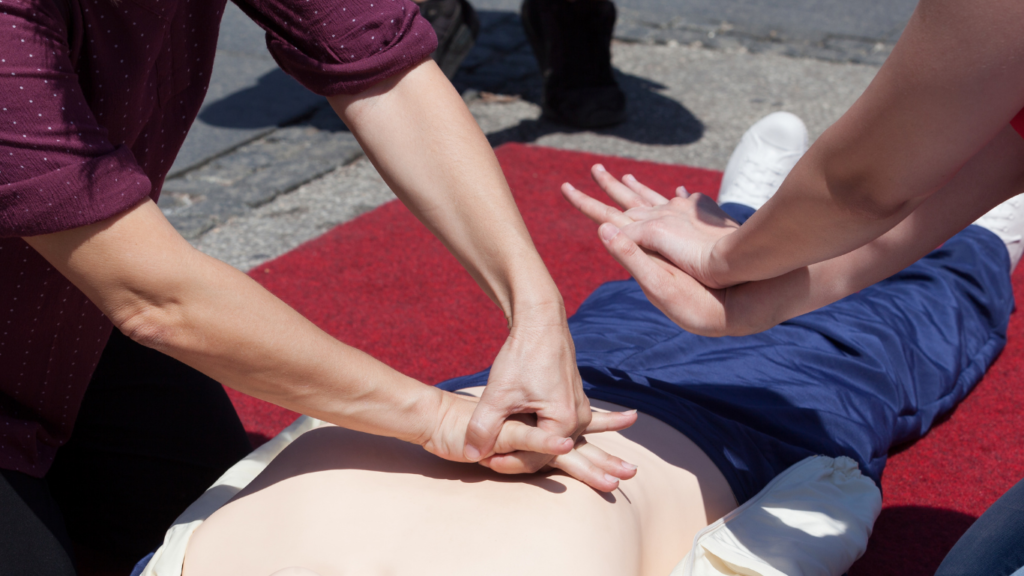
Emergency preparedness starts with employees who know how to respond.
Amara Career Training provides CPR and First Aid training for organizations that want to equip their employees with practical emergency response skills.
For construction companies, training can help supervisors and employees develop the knowledge and hands-on skills needed to respond appropriately when an unexpected medical emergency occurs.
Want to prepare your construction team? Contact Amara Career Training to learn more about CPR and First Aid training for your organization.